Narrow Upper Jaw
A constricted upper arch can create a width mismatch between the upper and lower jaws.


A palate expander is an orthodontic appliance used to widen a narrow upper jaw or dental arch. Expansion can create room for crowded or erupting teeth, improve certain crossbites, and help the upper and lower arches fit together more appropriately.
The right type of expander depends heavily on age, growth stage, anatomy, and how much of the correction needs to come from the teeth versus the supporting bone.
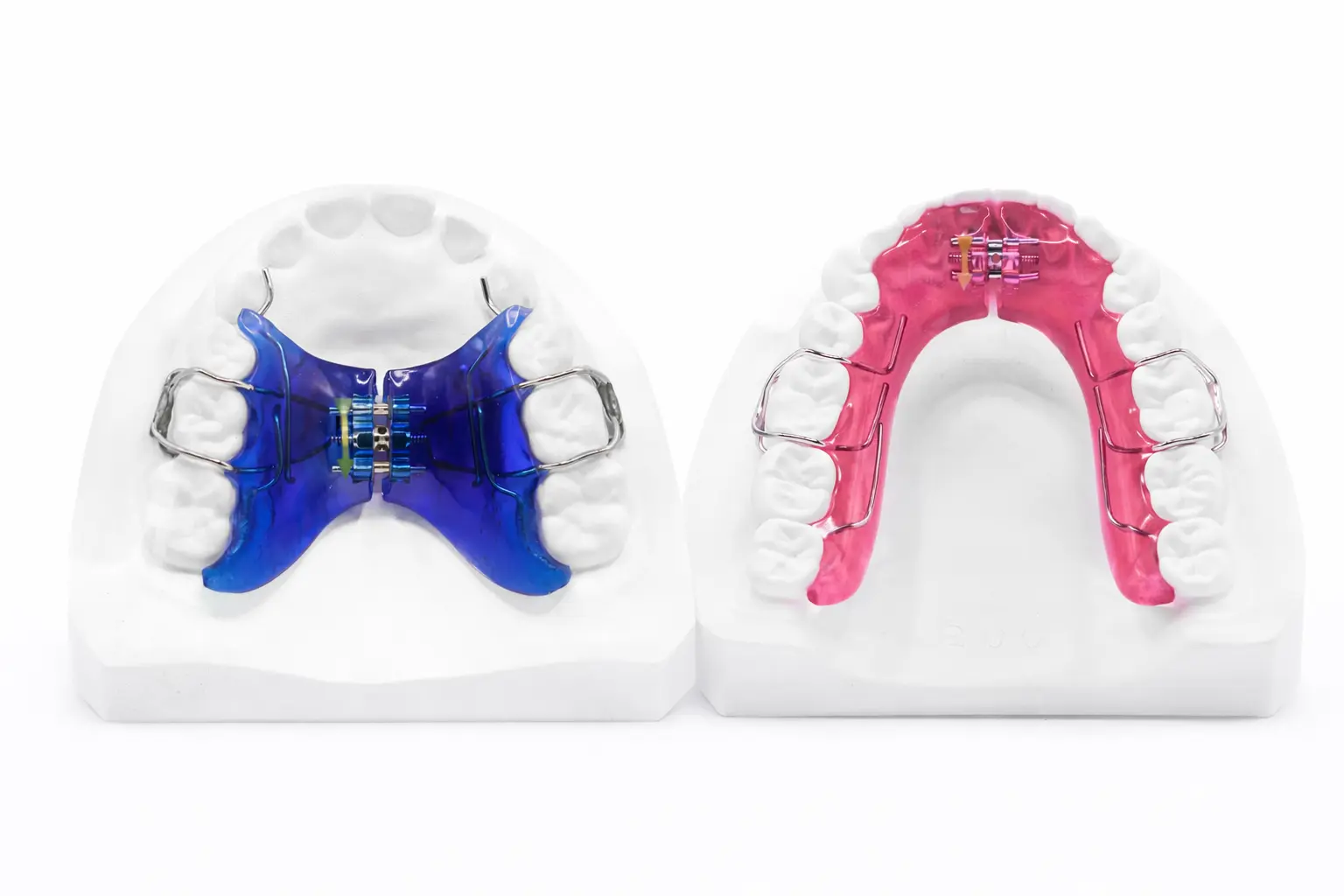
A palate expander gradually increases width across the upper jaw or dental arch. Orthodontists may use expansion when the upper arch is too narrow for the lower arch, when crowding or eruption space is limited, or when a transverse bite problem such as a crossbite is present.
Some expanders primarily move teeth and the surrounding dental arch. Others are designed to engage the supporting bone more directly. That distinction becomes increasingly important as patients become more skeletally mature.
A constricted upper arch can create a width mismatch between the upper and lower jaws.
Expansion may be used when upper teeth or the upper arch sit too far inside the lower arch.
Creating additional arch width can provide space for alignment or help permanent teeth erupt into a better position.
The upper jaw develops from two sides that meet at the midpalatal suture. In growing children, this area is generally more responsive to orthopedic expansion. As skeletal maturity increases, the suture and surrounding structures become more resistant.
An expander applies controlled transverse force over time. Depending on the appliance and the patient's maturity, that force may produce a combination of dental movement and skeletal change.
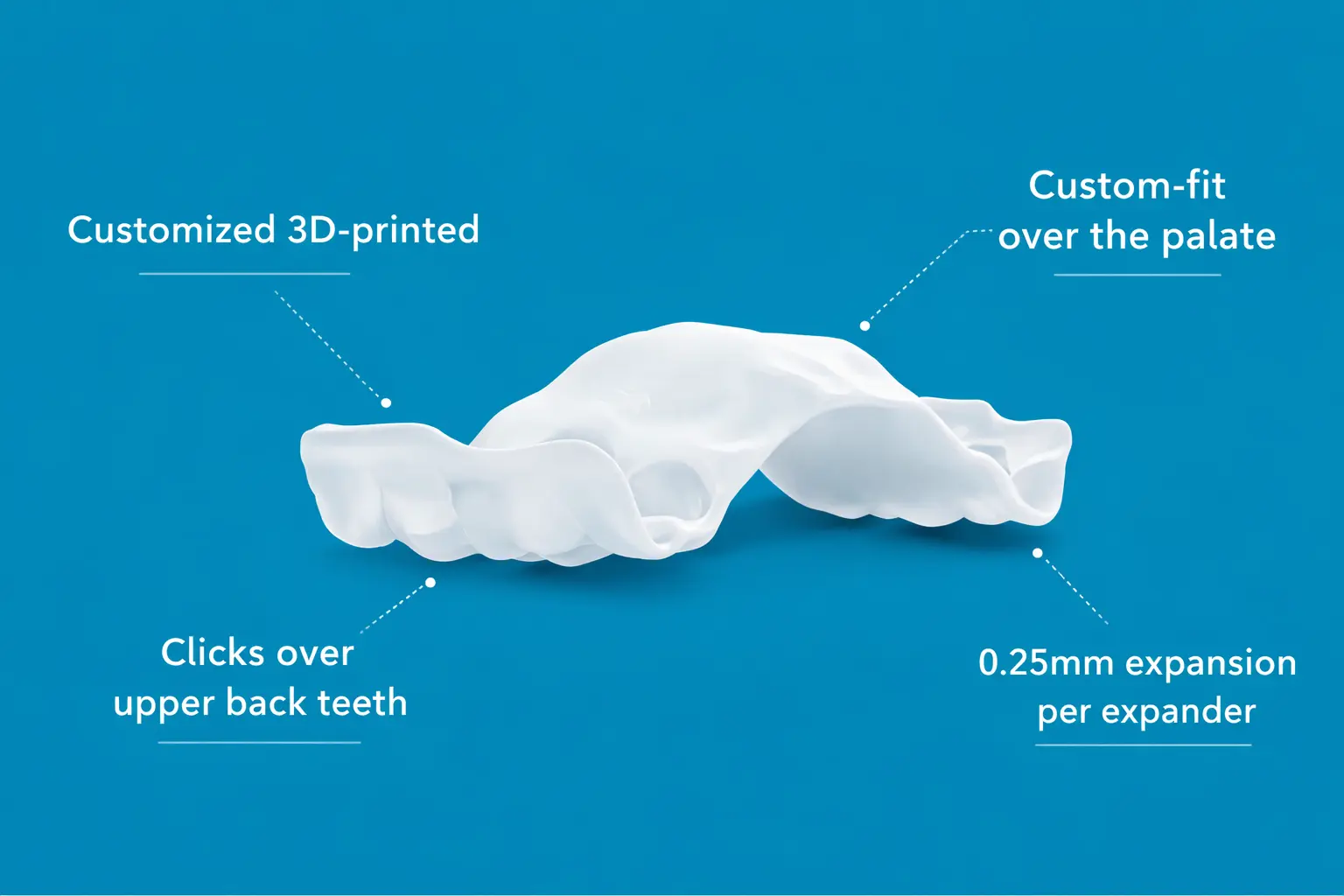
There is no single expander that is right for every patient. The main difference is how the appliance delivers force and how much dental versus skeletal correction is needed.
Custom removable appliances can be used in selected patients when gradual arch development and patient-controlled wear are appropriate.
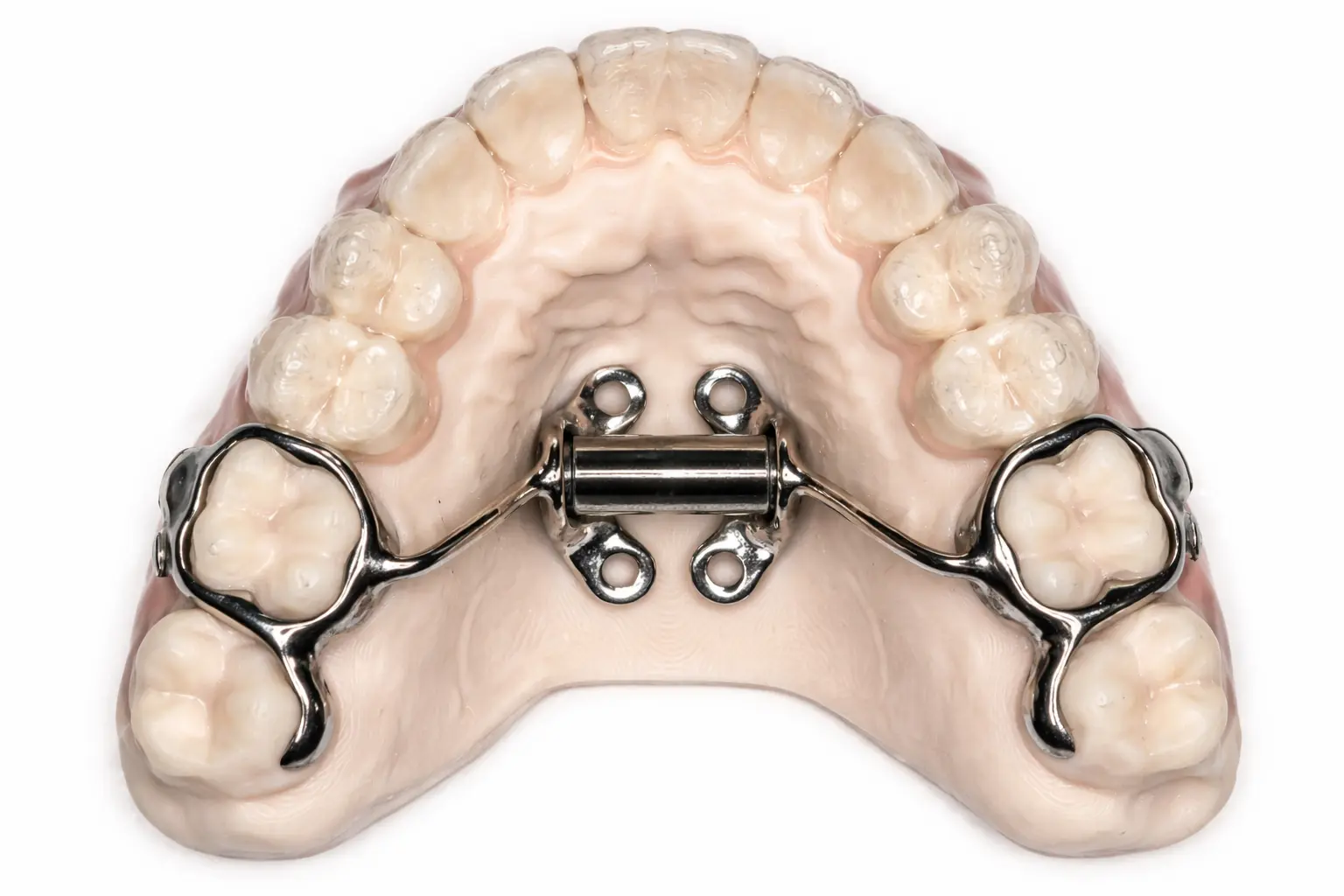
Fixed expanders remain attached during treatment and can provide consistent activation for crossbite correction or more significant upper-arch constriction.
In more skeletally mature patients, mini-screw-supported appliances such as MARPE/MSE may be considered when the goal requires greater skeletal engagement and less reliance on tooth tipping.
Some adults have skeletal resistance or periodontal limitations that make appliance-only expansion less predictable. In those cases, Dr. Yu may coordinate a surgically assisted pathway with an oral surgeon or periodontist.
For detailed adult options including MARPE, MIND, SFOT, and MSDO, visit our Adult Palate Expansion page.
These treatments are related, but they do different jobs. Side-by-side comparisons can make it easier to understand when expansion is the main goal and when another orthodontic approach may be used instead or alongside it.
| Comparison | Main Difference | Typical Role | Where to Learn More |
|---|---|---|---|
| Palate Expander vs Braces | An expander develops arch or jaw width. Braces primarily move and align teeth. | Expansion may come before or alongside braces when width or space is part of the treatment problem. | Braces at Face Focused |
| Palate Expander vs Clear Aligners | Expanders are used when more dedicated width development is needed. Aligners primarily move teeth and can coordinate alignment after or during selected expansion plans. | Some patients use expansion first, while others have expansion and aligner movement coordinated together. | Clear Aligners |
| Traditional Palate Expander vs MARPE | Traditional expanders rely more on the teeth and growing skeletal structures. MARPE uses mini-screw support to engage the supporting bone more directly. | Traditional expansion is common in growing patients; MARPE is considered in selected more skeletally mature teens and adults. | Adult Palate Expansion & MARPE |
| Removable vs Fixed Expander | Removable expanders can be taken out by the patient. Fixed expanders remain attached during the active phase. | The choice depends on age, compliance, bite pattern, and how much expansion is needed. | Pediatric Arch Development |
| Child vs Teen vs Adult Expansion | Skeletal response generally changes as the patient matures. | Younger patients usually have more growth flexibility, while teens and adults may require different anchorage or sequencing. | See the age-specific pathways below. |
The word “expander” can describe very different treatment strategies depending on skeletal maturity. This page explains the appliance concept; the age-specific pages below explain how Face Focused plans treatment for each stage.
Growing children generally have more adaptable sutures and bone. Early expansion may be used to address crossbite, crowding, arch constriction, eruption space, and growth-related concerns while development is still active.
Early Expansion & Arch DevelopmentTeen expansion requires closer attention to skeletal maturity, eruption stage, bite goals, and whether tooth-borne or bone-supported mechanics are more appropriate.
Teen Palate ExpansionAdult palate expansion is planned around mature skeletal anatomy. Options may include selected tooth-borne approaches, MARPE, or coordinated surgical assistance depending on the amount and type of correction needed.
Adult Palate Expansion & MARPEExpansion outcomes look different depending on age, appliance design, the amount of constriction, and the treatment goal. These Face Focused examples show why “palate expansion” is not one identical procedure for every patient.
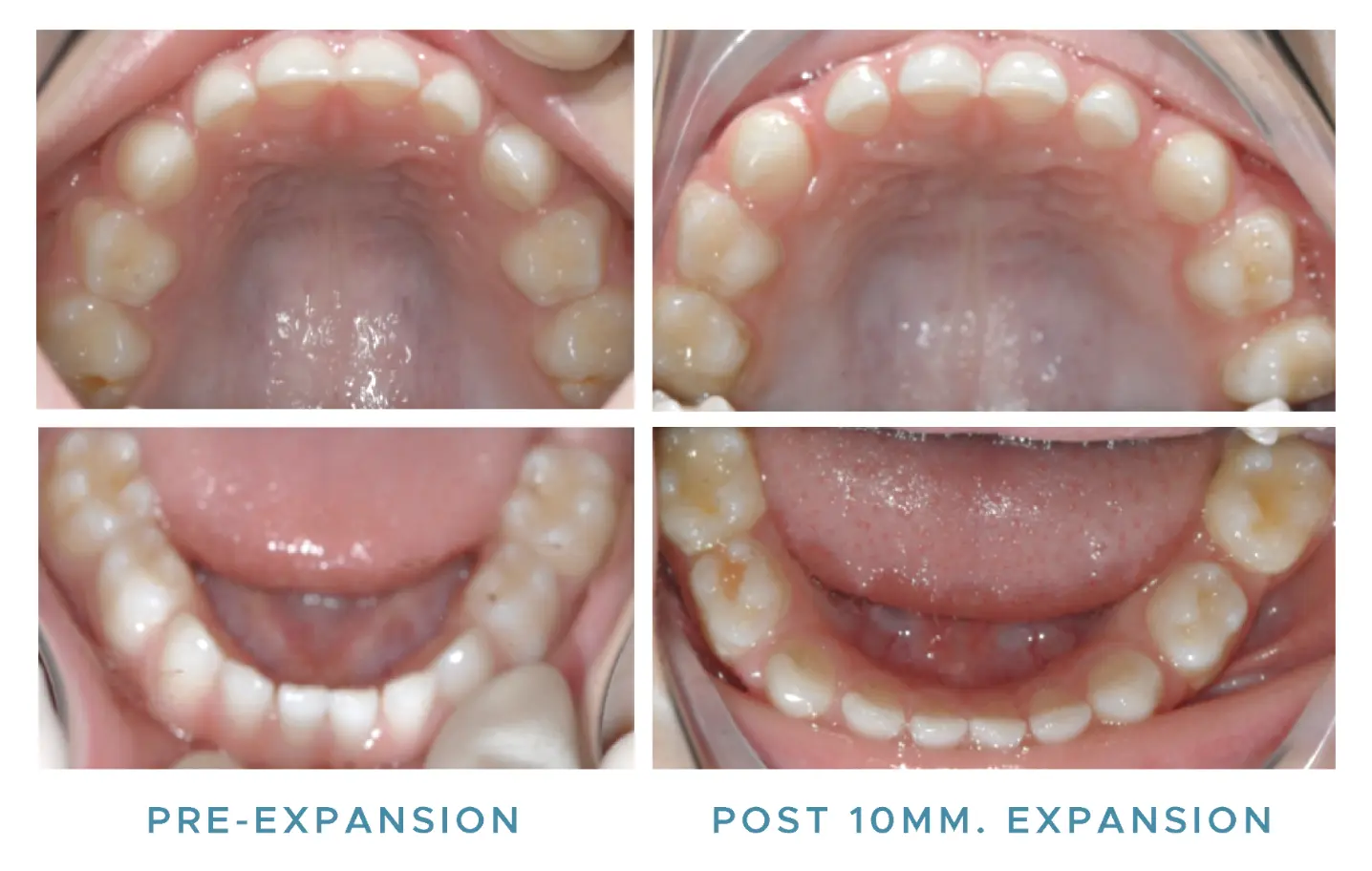
This pediatric example shows arch-width change during early expansion while growth is still active. Treatment timing and the amount of expansion are individualized.
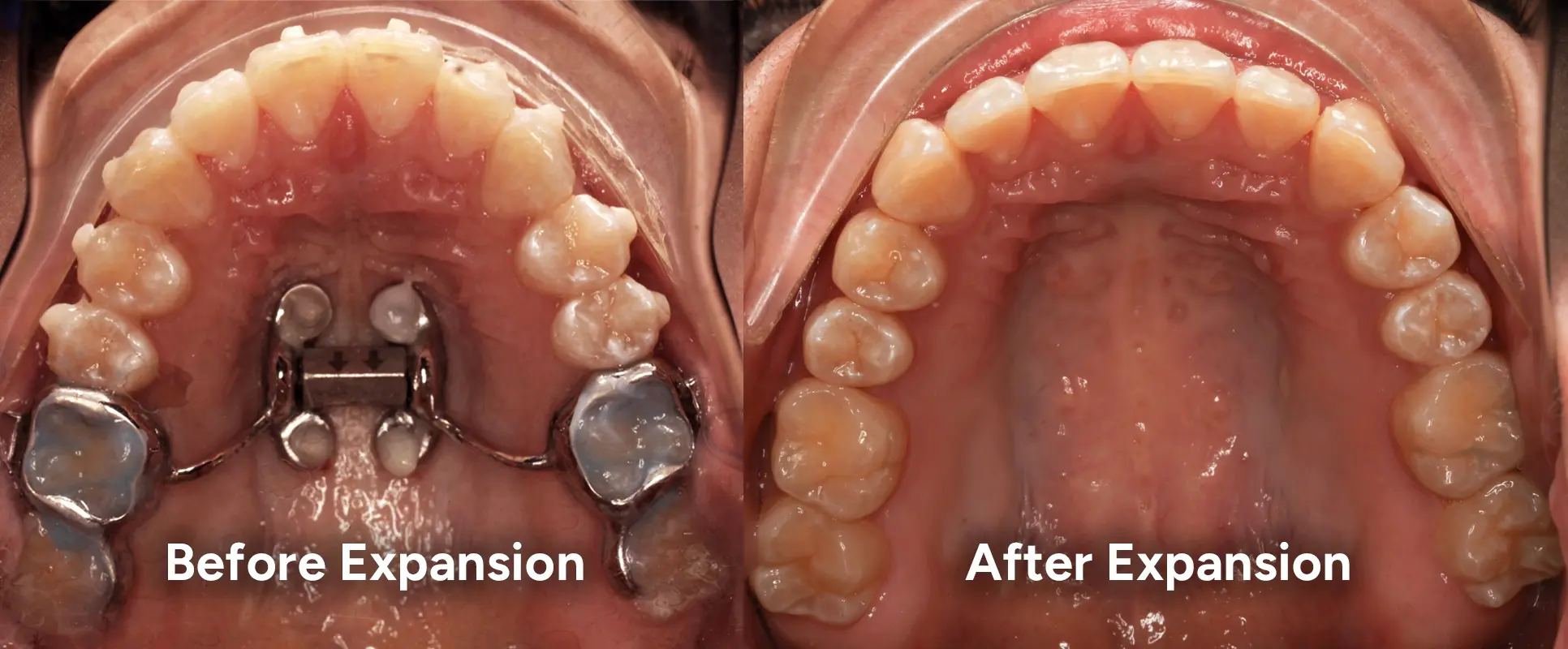
As the palatal suture becomes more interlocked, selected teens may benefit from stronger skeletal anchorage. This example illustrates a bone-supported pathway.
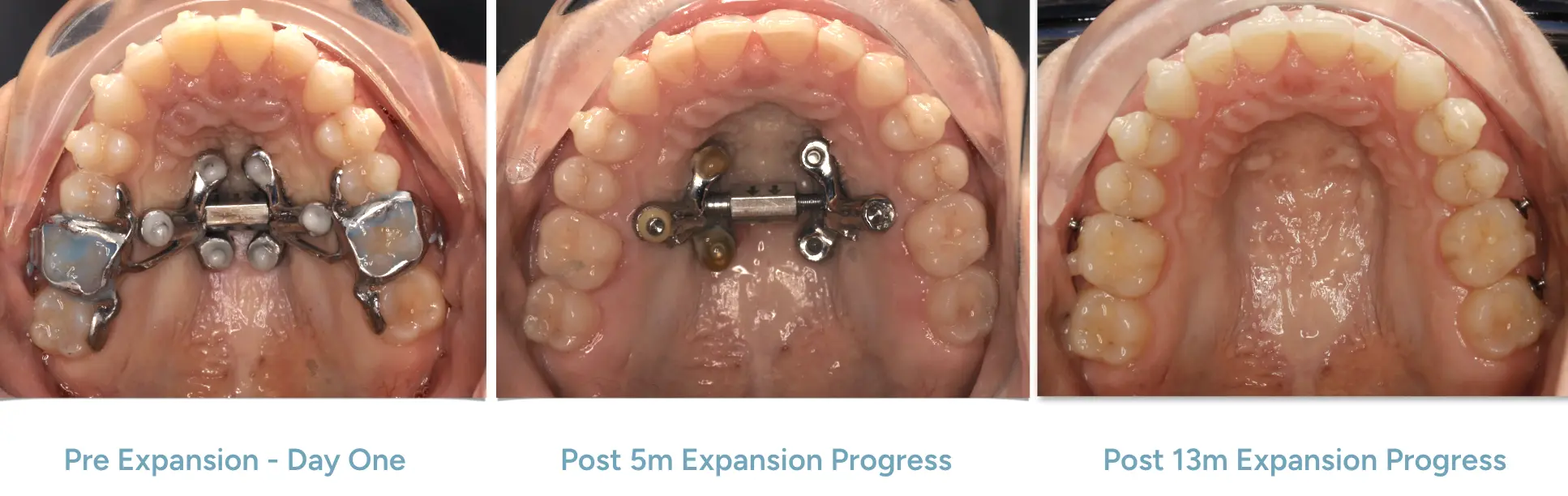
This adult case shows documented progress from pre-expansion through five and thirteen months. Adult treatment may require bone-supported or surgically assisted mechanics based on skeletal findings.
These are individual clinical examples. They are shown for education and do not predict the amount of expansion, timing, comfort, facial change, airway change, or final result for another patient.
Many patients notice pressure or temporary soreness as they adapt. Severe or persistent pain should be discussed with the treating orthodontist.
An appliance on the palate can temporarily affect speech and increase saliva while the tongue adapts to a different amount of space.
Food can collect around fixed appliances, so careful brushing and cleaning are important. Food recommendations vary by appliance type.
| Question | General Answer | Why It Varies |
|---|---|---|
| How long is an expander worn? | Expansion and stabilization can take weeks to months, and some adult pathways can take longer. | Age, skeletal maturity, severity, appliance type, activation and treatment sequencing all matter. |
| Will a gap appear between the front teeth? | It can occur with certain expansion mechanics, especially when the upper jaw is widening skeletally. | The amount and timing depend on the appliance and how alignment is coordinated. |
| Will braces or aligners be needed afterward? | Often, expansion is one phase of a broader orthodontic plan. | Alignment needs, bite correction and treatment goals differ from patient to patient. |
| Do I turn the expander myself? | Some appliances are adjusted at home; others are not. | Only follow the activation schedule and instructions provided by your orthodontic team for your specific appliance. |
Palate expansion is typically planned as part of orthodontic care because the decision involves more than simply choosing an appliance. The orthodontist evaluates jaw width, tooth position, bite relationships, growth stage, skeletal maturity, periodontal support, and how expansion will fit into the rest of the treatment plan.
At Face Focused Orthodontics in Agoura Hills, California, Dr. Tim Yu evaluates children, teens, and adults to determine whether expansion is appropriate and which pathway best matches the patient's anatomy and goals.
Patients also travel to Face Focused from outside the Los Angeles area for specialized expansion evaluations.
A general dentist may identify a narrow arch, crowding, crossbite, or other concern and refer for orthodontic evaluation. An orthodontist focuses specifically on tooth movement, bite relationships, jaw development, and treatment sequencing.
For a palate expander, the key question is not just which appliance to use, but whether expansion is appropriate, how much is needed, and how it should coordinate with braces, aligners, growth guidance, or adult skeletal treatment.
Patients commonly describe pressure, tightness, or mild soreness rather than severe pain. Comfort varies by appliance and treatment stage. Contact your orthodontist if pain is severe, persistent, or unexpected.
It develops width across the upper jaw or dental arch. Depending on the patient's age and appliance, that may involve dental movement, skeletal expansion, or a combination of both.
The appliance applies controlled transverse force. In growing patients, the midpalatal suture is generally more responsive. Older teens and adults may need stronger skeletal anchorage or additional procedures when true skeletal widening is the goal.
Yes, but adult treatment differs from expansion in growing children. Selected adults may use tooth-borne appliances, MARPE, or surgically assisted expansion depending on skeletal anatomy and treatment goals. See our adult palate expansion guide.
Expansion changes the width relationship of the upper jaw and dental arch. Visible facial or smile changes vary by age, anatomy, treatment mechanics, and the amount of correction. Individual before-and-after examples should not be treated as a prediction of another patient's outcome.
There is no single timeline. Active expansion may occur over weeks or months, followed by a stabilization period. Adult skeletal expansion can involve longer and more complex sequencing than early expansion in a growing child.
No. Crowding can have different causes, and not every crowded smile needs expansion. Dr. Yu evaluates arch width, bite relationship, eruption pattern, growth stage, periodontal support, prior treatment and other findings before recommending a plan.
A dentist may be the first provider to notice a narrow arch, crossbite, crowding, or eruption problem. Because expansion changes the relationship between the teeth, arches, and jaws, an orthodontic evaluation is typically the most appropriate place to determine whether a palate expander is indicated and how it should fit into the overall treatment plan.
They do different jobs. A palate expander develops width, while braces primarily align and position teeth. Some patients need only one, while others use expansion first or combine expansion with braces as part of the same treatment plan.
Traditional palate expanders rely more on the teeth and the natural flexibility of the growing upper jaw. MARPE uses mini-screw anchorage to engage the supporting bone more directly and is generally considered in selected older teens and adults when more skeletal expansion is needed.
Cost varies because “palate expander” can refer to very different appliances and treatment plans. The total depends on the appliance, records and imaging, whether additional orthodontic treatment is needed, and whether surgical coordination is part of the plan. Face Focused can review treatment and financial options after an individualized evaluation.
This page is designed to explain expansion in plain language while keeping age-specific treatment decisions on the appropriate Face Focused treatment pages.
Dr. Tim Yu evaluates growth stage, arch width, bite relationships, crowding, skeletal maturity and treatment goals to determine whether expansion should be considered and which approach is appropriate.
Face Focused Orthodontics is located in Agoura Hills, California, and also evaluates patients who travel from outside the Los Angeles area for specialized orthodontic care.