Narrow Upper Jaw or Transverse Deficiency
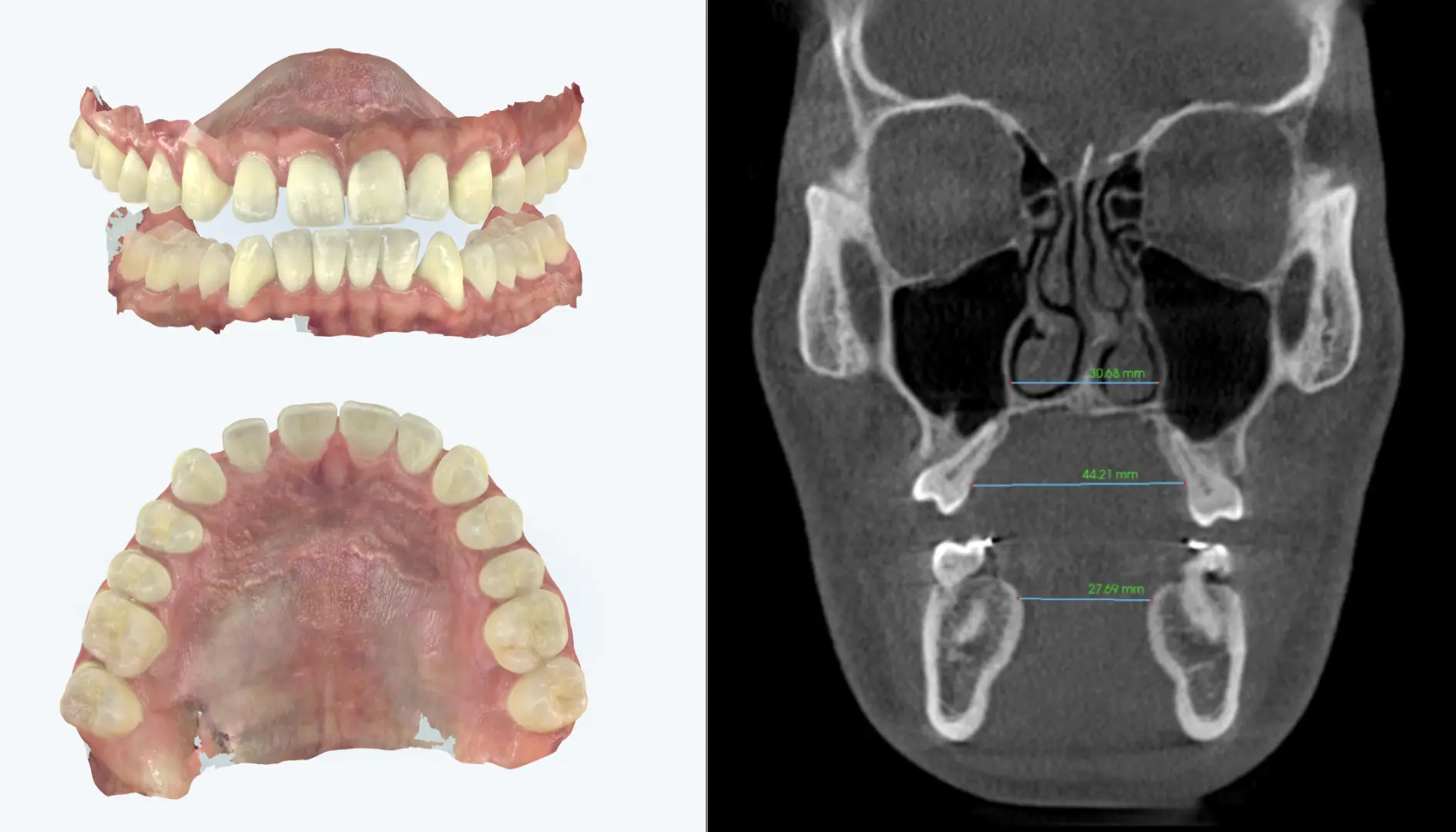
A constricted upper arch, posterior crossbite, or upper-lower width mismatch may indicate that transverse correction should be considered as part of treatment planning.


Adult palate expansion is used to create additional upper-jaw and arch width in selected skeletally mature patients. Depending on the amount and type of expansion needed, Dr. Yu may recommend tooth-borne expansion, MARPE (miniscrew-assisted rapid palatal expansion), or a surgically assisted approach based on skeletal anatomy, bite relationships, periodontal support, and long-term stability goals.

Yes. Palate expansion is possible in adults, but the approach is different from expansion in growing children because the midpalatal suture and surrounding facial bones are more mature. Some adults may be candidates for limited tooth-borne expansion, while others need greater skeletal support through MARPE or a coordinated surgical procedure. The right pathway depends on the type of width deficiency, suture maturity, periodontal support, prior orthodontic treatment, and the amount of skeletal change needed.
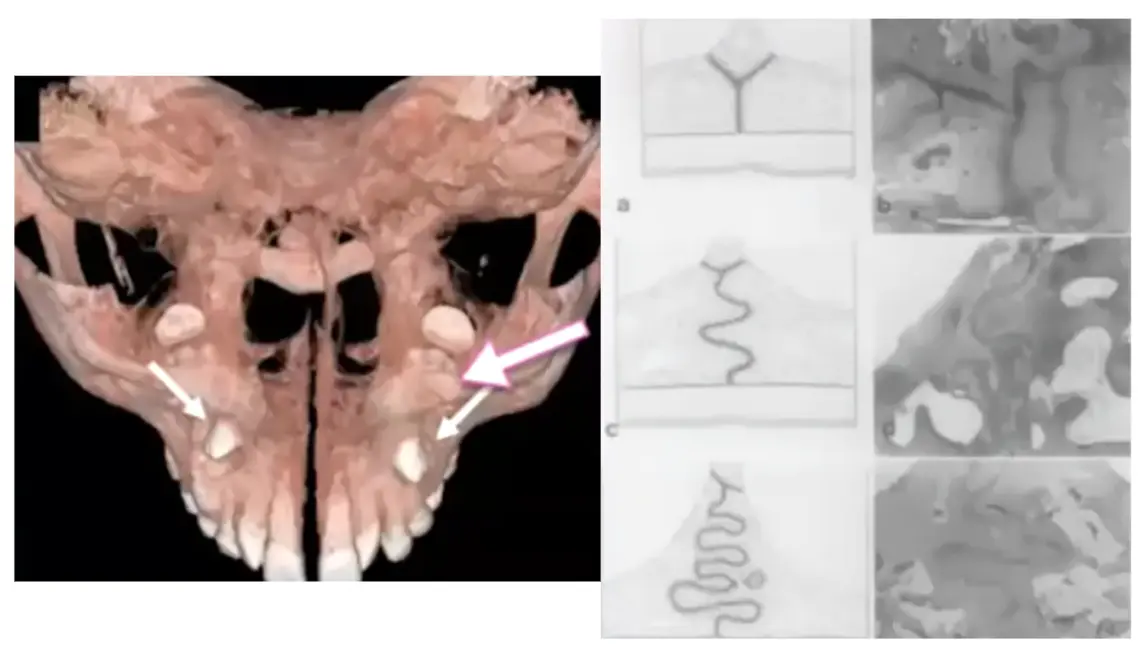
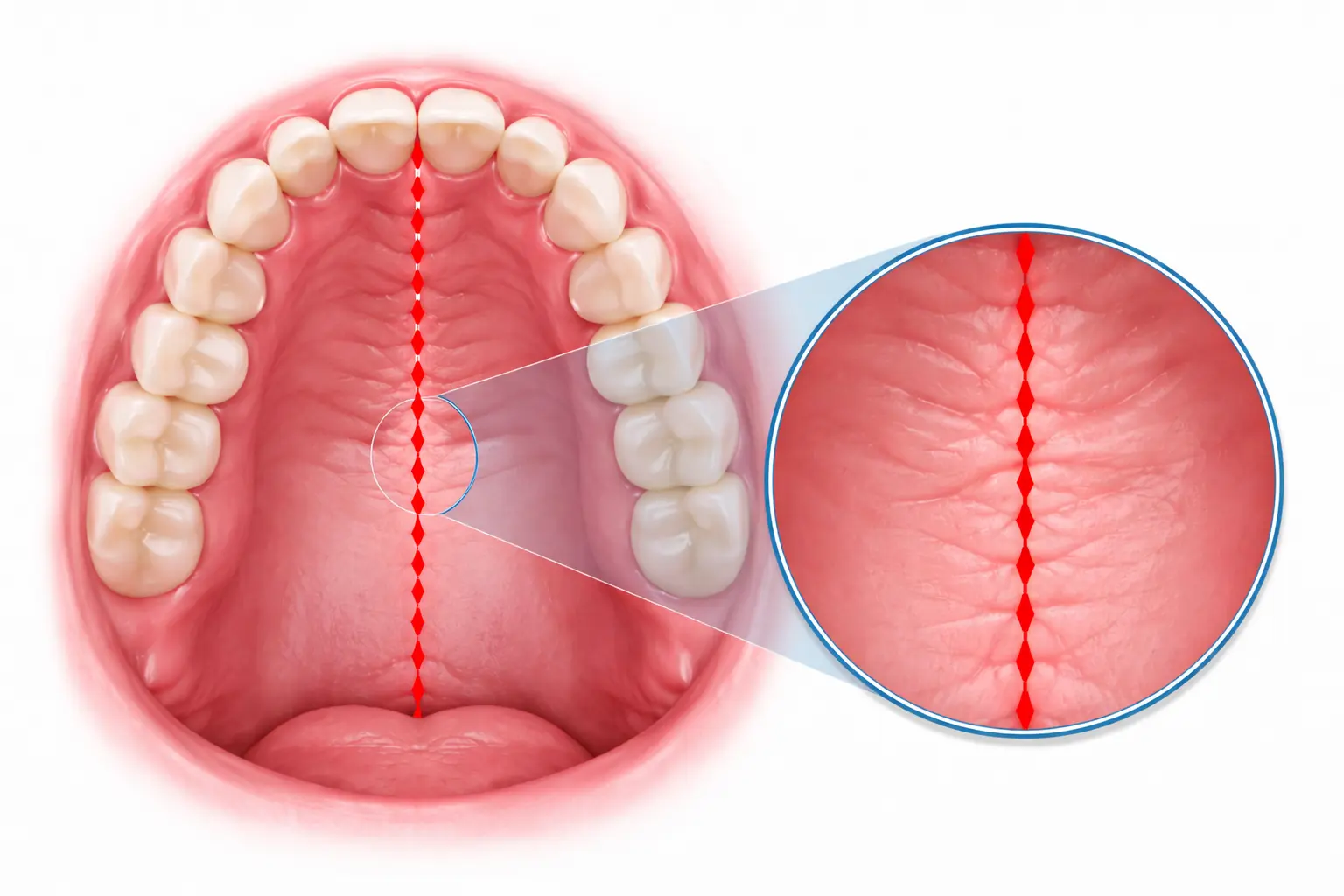
The midpalatal suture is the seam that joins the right and left halves of the upper jaw and plays a major role in how the upper arch responds to expansion. In adults, this area is usually more interlocked, denser, and more resistant than it is in younger patients, which means conventional tooth-borne expansion may produce more dental tipping and less true skeletal widening. Because adult skeletal anatomy is more mature, selected cases may require MARPE to direct force more effectively toward the suture and supporting bone, improving the potential for meaningful transverse correction and more stable width development.
Adult expansion is not one-size-fits-all. Dr. Yu evaluates the location and severity of the width deficiency, the relationship between the upper and lower arches, previous orthodontic treatment, periodontal support, and the amount of dental versus skeletal movement needed before recommending a pathway.
A constricted upper arch, posterior crossbite, or upper-lower width mismatch may indicate that transverse correction should be considered as part of treatment planning.
Expansion can sometimes create usable arch space for alignment and may be considered when the goal is to reduce pressure toward extraction in appropriately selected cases.
Adults who previously had extractions, retraction, or recurrent crowding may need the transverse dimension reviewed before retreatment. Our reopening extraction spaces resource explains one related retreatment pathway.
Palatal width can be considered alongside tongue space, nasal anatomy, sleep, and breathing patterns. Orthodontic findings are evaluated as one part of a broader picture, and medical sleep disorders require appropriate medical evaluation.
Adult expansion is typically planned through two pathways: tooth-borne expansion and bone-supported expansion. Protocol selection is based on patient symptoms, treatment goals, anatomy, and preference.
Tooth-borne removable expanders apply controlled transverse forces through the dentition and are used in selected adult cases where dental expansion mechanics can meet the treatment objective.
This pathway is often considered when mild width development is needed and when the biomechanics can be managed without relying on a primarily skeletal expansion strategy.
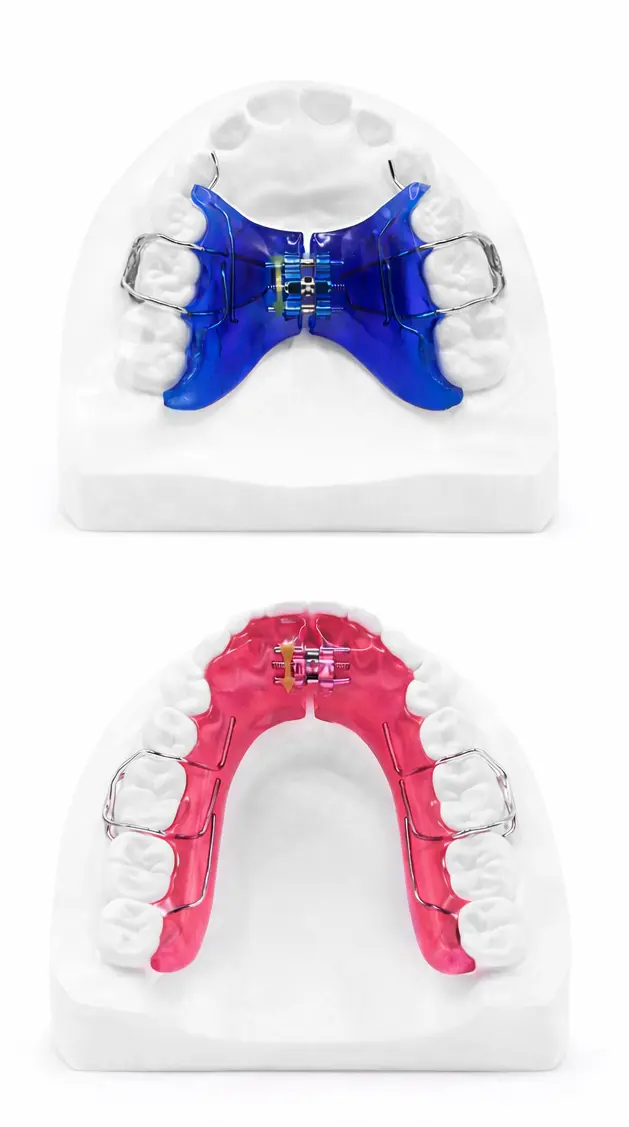
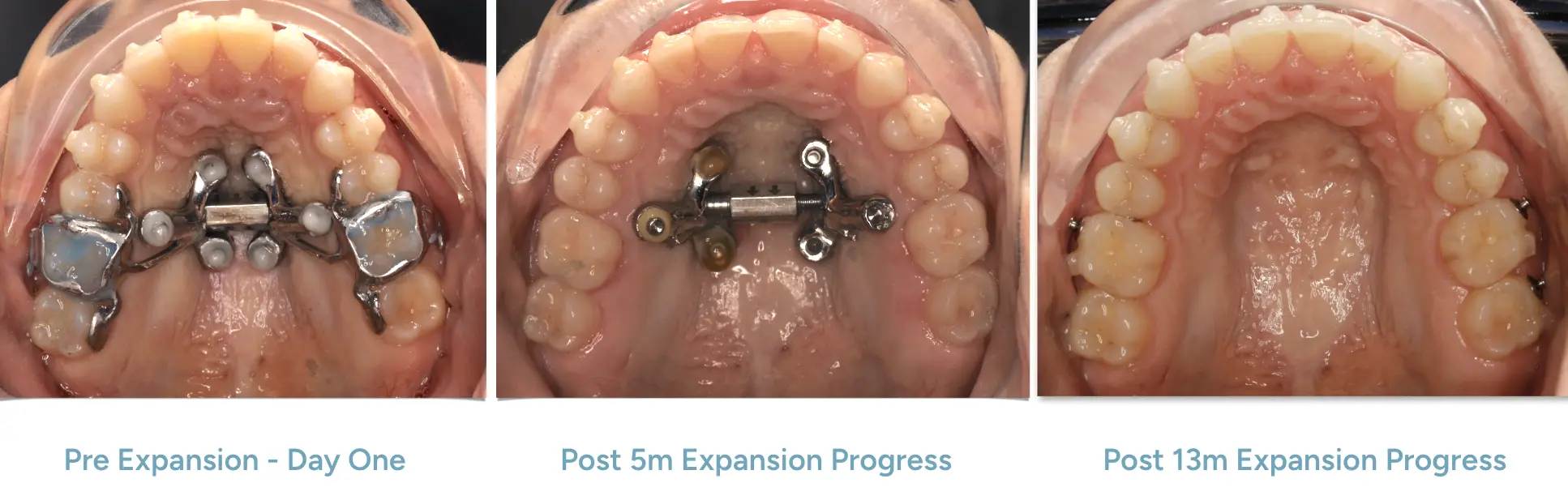
When stronger skeletal support is needed to address transverse deficiency with less dependence on dental tipping alone, temporary anchorage-based expansion can help direct force more effectively to the supporting bone. This approach is especially relevant when the clinical goal extends beyond simple tooth movement.
Adult candidates often include patients with prior extraction history from earlier orthodontic treatment, limited tongue space, persistent maxillary constriction, or relapse patterns tied to inadequate transverse width.
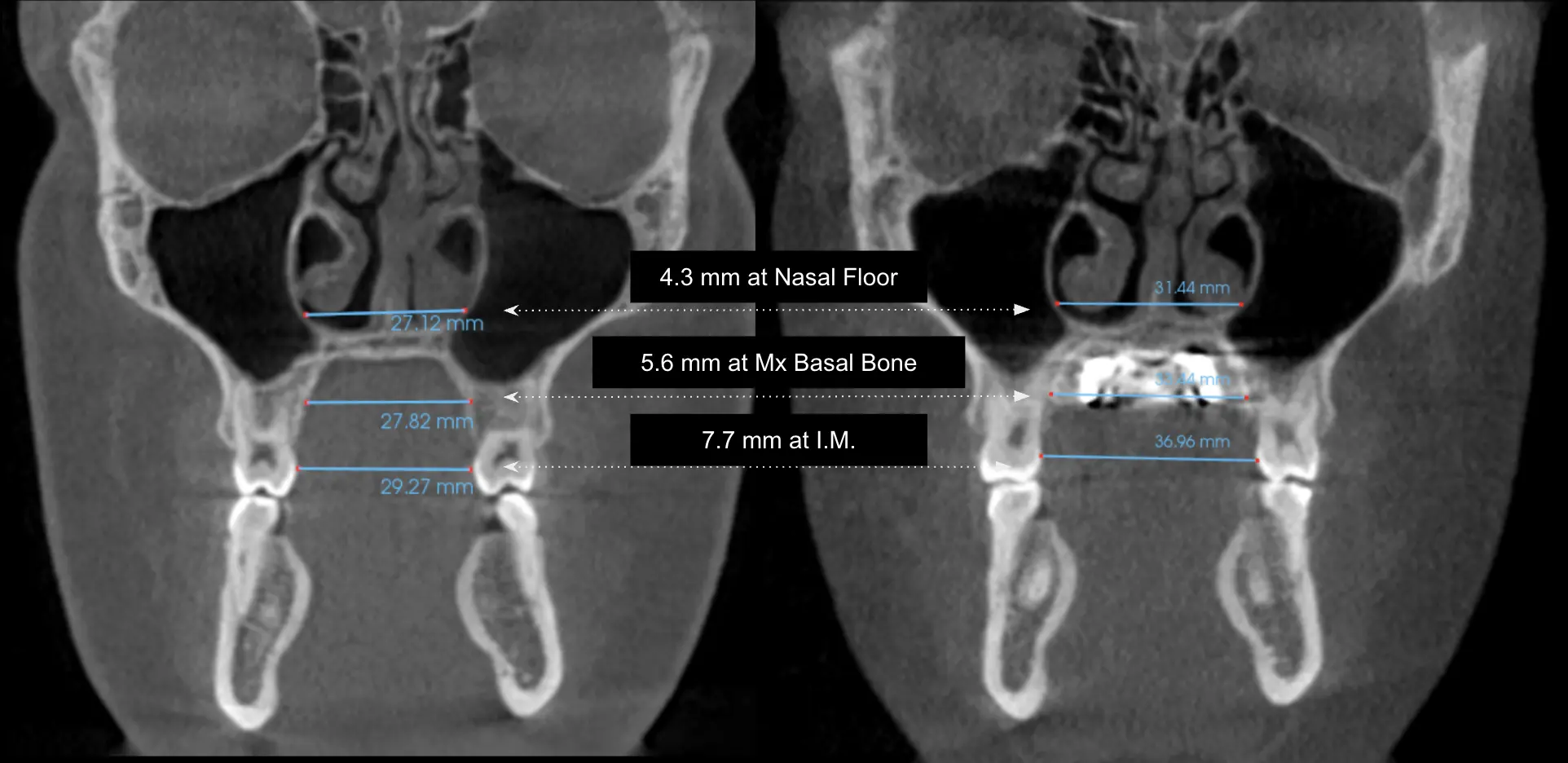
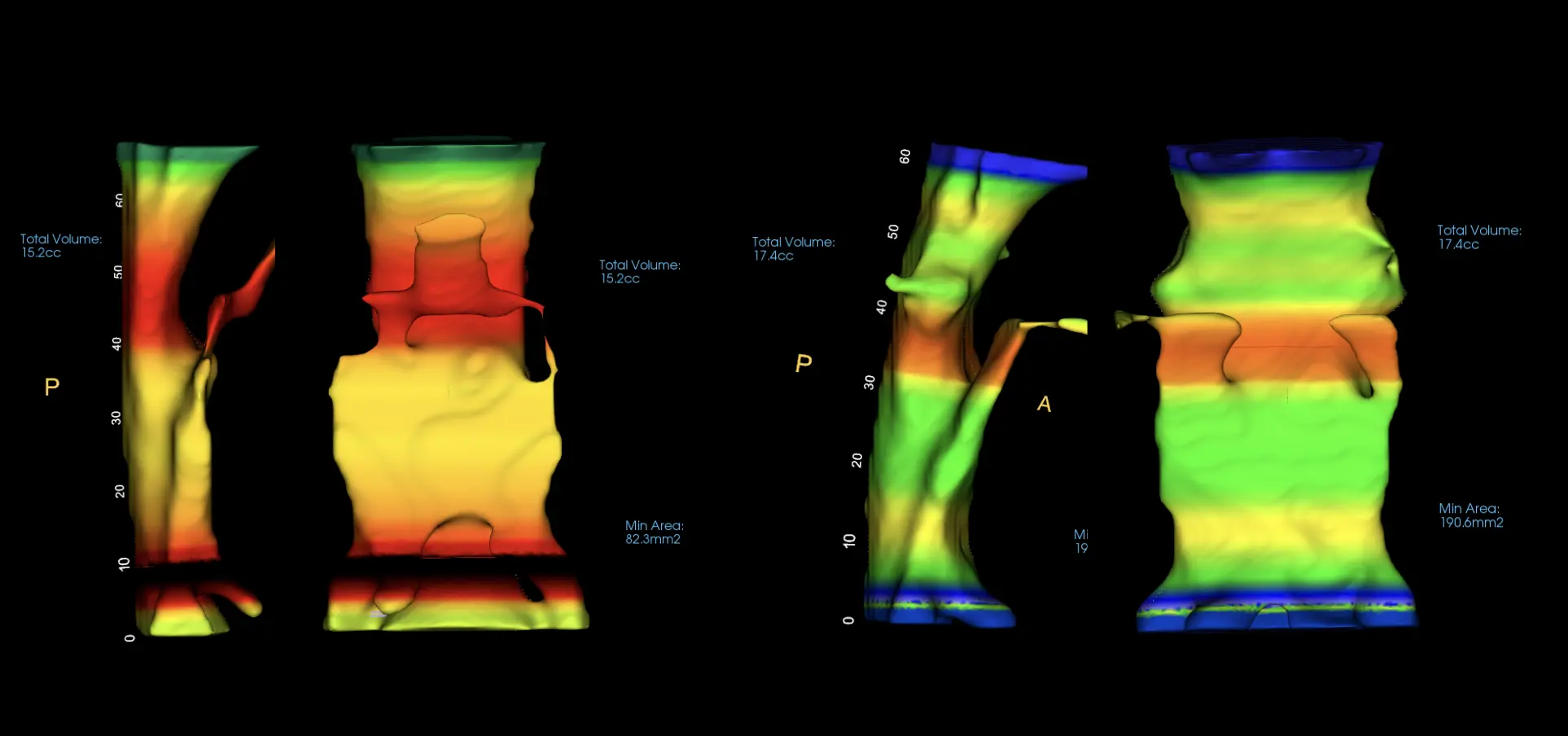
Our office commonly coordinates skeletal expansion together with aligner-based tooth movement rather than waiting until expansion is fully complete before addressing dental alignment. This approach allows arch development and tooth coordination to occur simultaneously, so the teeth can be guided into position as the maxillary width is changing.
In certain situations, braces may also be used instead of clear aligners. This typically applies to specific clinical scenarios and can be discussed with Dr. Yu during the treatment planning process.
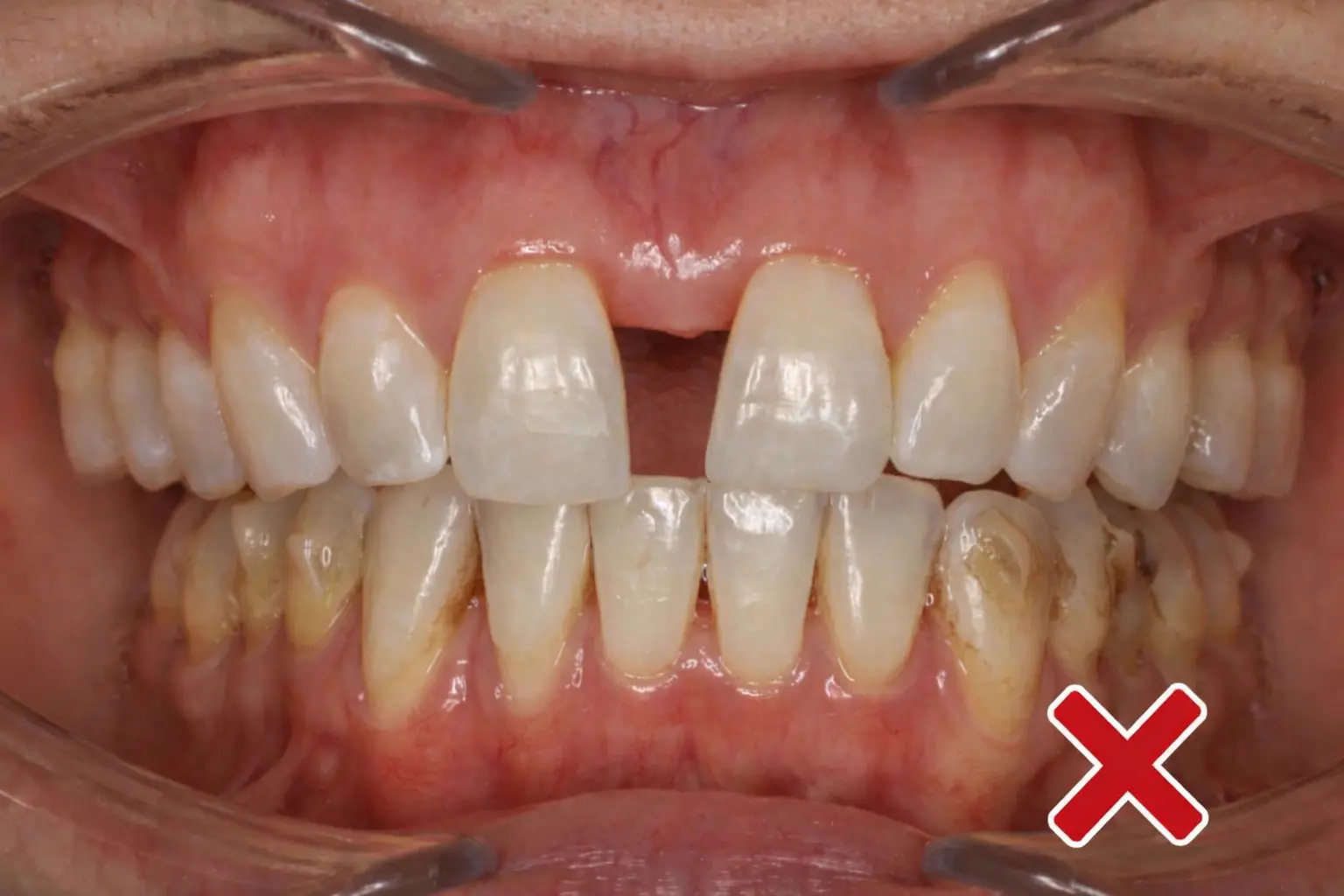
In a traditional MARPE workflow, skeletal expansion is typically completed before detailed alignment begins. As the midpalatal suture separates, a visible space may develop between the upper central incisors during active expansion, with orthodontic alignment sequenced afterward to close and coordinate that space.
By sequencing treatment this way, the space that opens between the front teeth is often managed more actively than it is in a traditional expansion-first workflow. The goal is to support skeletal correction while keeping the dental response more controlled, improving arch coordination as expansion progresses, and reducing the need for a separate large-gap phase before alignment begins.
In selected adults, suture maturity and skeletal resistance may limit expansion response with appliance activation alone. When indicated, a surgically assisted approach can be incorporated to support predictable transverse correction. We work with a network of oral surgeons and periodontists to coordinate these procedures when they are part of the treatment plan. For cases that require broader surgical orthodontic planning, learn more about our surgical case orthodontics approach.
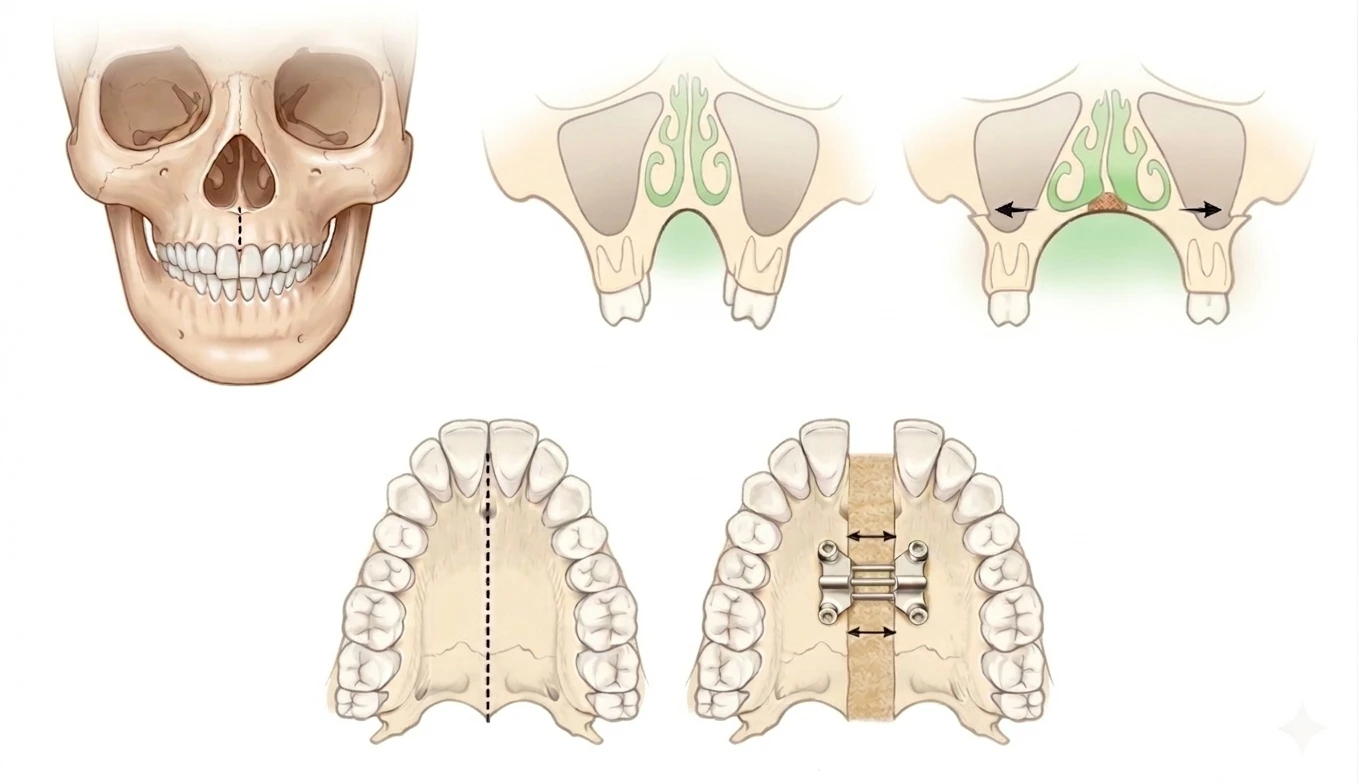
MIND is a minimally invasive corticotomy-assisted procedure that may be considered in selected adult patients when skeletal resistance limits the response to appliance-based expansion, using several small corticotomy cuts to reduce resistance and stimulate localized bone remodeling when appliance-based expansion alone may be insufficient but a more extensive surgical procedure is not necessary.
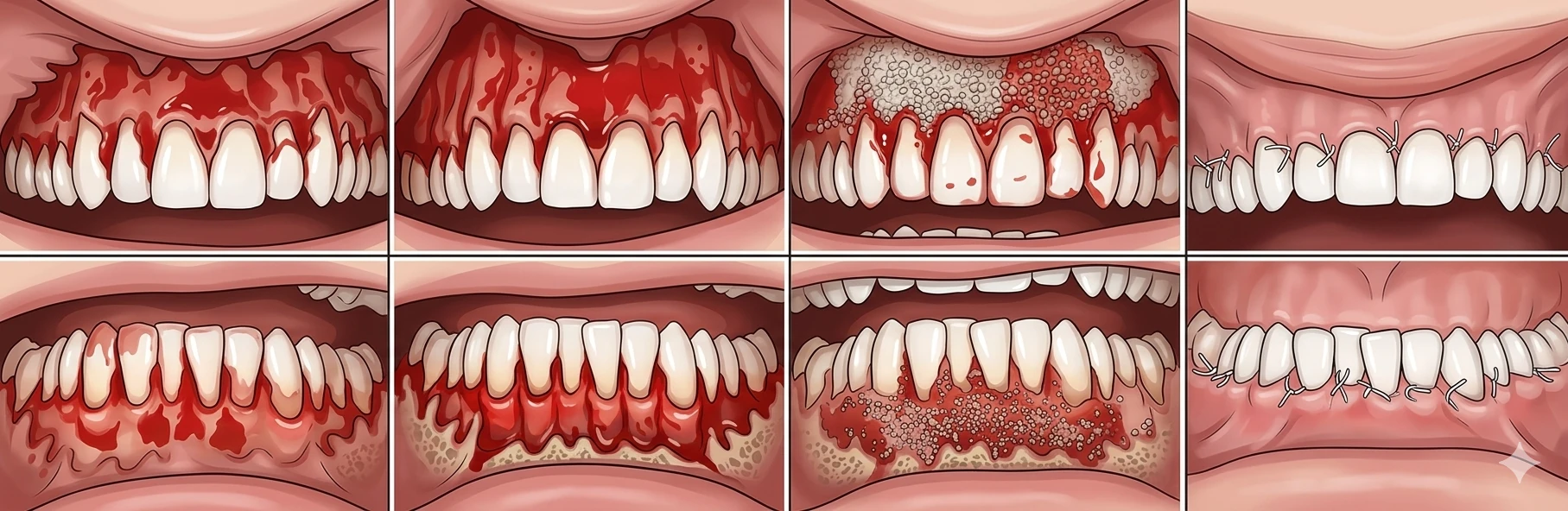
Content warning: this is a realistic medical illustration showing blood and healing tissue during SFOT treatment. Select the button only if you want to view it.
SFOT, or surgically facilitated orthodontic therapy, is a procedure that combines selective corticotomies with bone grafting to increase volume of the alveolar bone surrounding the teeth. The goal is to expand the biologic limits of tooth movement by augmenting the supporting bone and stimulating a temporary regional acceleratory response that can allow teeth to move more efficiently during orthodontic treatment.
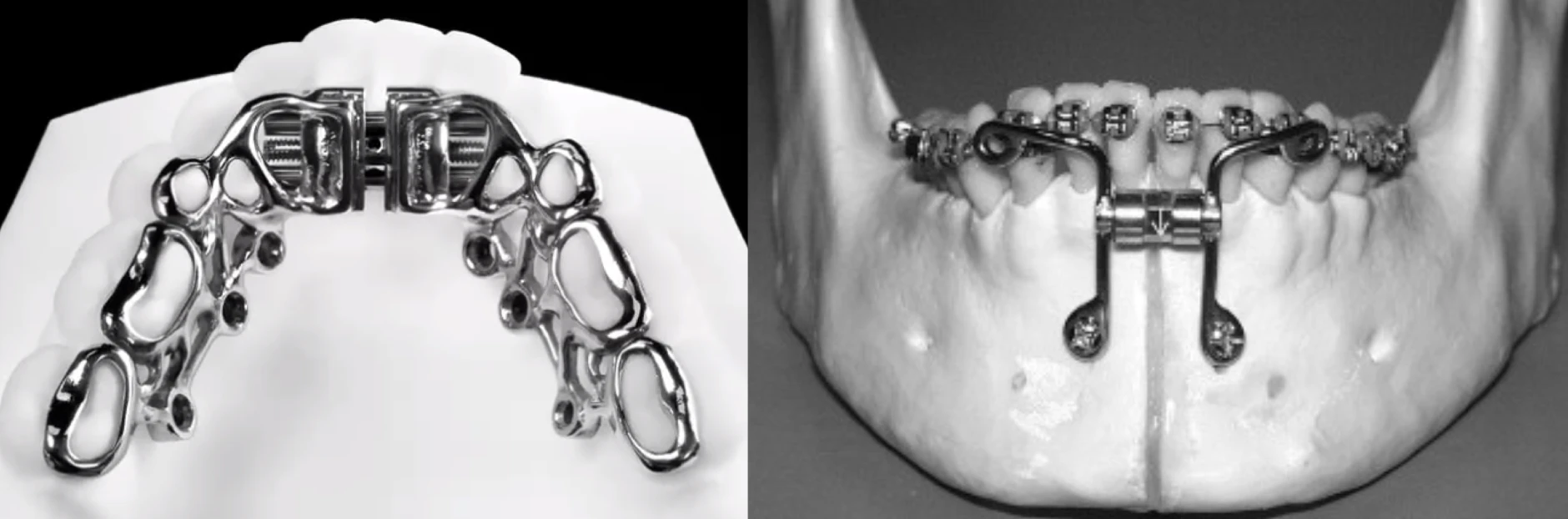
MSDO, or mandibular symphyseal distraction osteogenesis, is used when lower-jaw widening is needed. The procedure creates a controlled separation at the mandibular midline and widens the arch as new bone forms during distraction, typically when the mandibular arch is narrow and orthodontic expansion alone would be limited to dental tipping rather than stable skeletal expansion.
Clinical exam and imaging are used to evaluate suture maturity, skeletal resistance, periodontal support, and whether a coordinated surgical procedure is likely to improve the predictability of expansion.
If one of these procedures is indicated, we coordinate planning with the appropriate oral surgeon or periodontist so timing, recovery expectations, and orthodontic activation can be sequenced clearly.
After the procedure and appliance phase begin, progress checks are used to monitor response, guide activation, and determine when the case is ready for the next stage of alignment and finishing.
Yes. Adult palate expansion is possible, but the approach depends on skeletal maturity and the type of width correction needed. Some adults may be treated with dental expansion, while others may need MARPE or a surgically assisted approach to obtain greater skeletal change.
MARPE stands for miniscrew-assisted rapid palatal expansion. It uses temporary anchorage devices, often called TADs or miniscrews, to transfer more of the expansion force to the palate and supporting bone instead of relying only on the teeth.
A conventional tooth-borne expander transfers force mainly through the teeth. MARPE adds skeletal anchorage with miniscrews, which may be preferred when the treatment goal requires more skeletal engagement in a mature patient.
The active expansion phase and the total orthodontic treatment timeline are not the same. Timing varies with the appliance, amount of correction, skeletal response, alignment needs, and whether surgical assistance is part of the plan. Dr. Yu reviews expected sequencing after the clinical exam and records are complete.
The cost depends on the appliance and the full treatment plan, including records and imaging, expansion, braces or aligners, retention, and any separately coordinated surgical care. A MARPE appliance fee and the cost of complete orthodontic treatment may cover different services. At your consultation, ask for an itemized estimate that explains what is included and whether any specialist fees are separate.
Patients can experience pressure, tenderness, or temporary discomfort during placement and activation. The experience varies by individual and by treatment protocol. Specific comfort expectations and pain-management instructions are reviewed before treatment begins.
Expansion changes the transverse width of the upper arch and may affect smile display and surrounding facial relationships. The amount and visibility of change vary by anatomy, age, treatment goals, and the amount of skeletal versus dental movement. Case-specific records are needed to discuss likely changes for an individual patient.
When skeletal resistance, periodontal limitations, or the amount of correction needed makes appliance-only expansion less predictable, Dr. Yu may coordinate with an oral surgeon or periodontist. Options discussed on this page include MIND, SFOT, and MSDO for appropriately selected cases.
This page provides general educational information. Adult expansion candidacy and treatment selection require an individualized orthodontic examination and records. Sleep-disordered breathing and obstructive sleep apnea require appropriate medical diagnosis and management.
Adult treatment planning confirms whether tooth-borne expansion, MARPE, or a surgically assisted sequence is most appropriate based on your records, skeletal findings, and treatment goals.
Dr. Tim Yu provides adult palate expansion and MARPE treatment at Face Focused Orthodontics in Agoura Hills, California, and evaluates patients who travel from outside the Los Angeles area for specialized orthodontic care.
Traveling from outside Southern California? See information for out-of-state and overseas patients.