
Retainers

Types of Retainers

After orthodontic treatment, retainers are essential for maintaining proper tooth alignment and supporting long-term bite stability. Teeth naturally shift over time, and consistent retainer wear helps preserve the final positions achieved through treatment, protect the bite relationship established during active orthodontic care, and reduce the risk of unwanted relapse as your smile settles over time.

Long-term stability Custom plan selection Wear + maintenance guidance Bite-based retainer choice Daily care affects results Combination retainers in some cases

Selected for Your Needs

Retainer type is selected based on your treatment result, bite function, lifestyle, and what is most realistic for long-term wear and maintenance.

What Is Typically Provided

An initial set of custom retainers is typically provided at the end of treatment to help maintain tooth position, bite alignment, and long-term stability.

Retainer Guide

Retainers are not one-size-fits-all. Clear removable retainers, Hawley retainers, and fixed bonded retainers each serve different purposes depending on how your teeth move, how your bite functions, and what type of maintenance is most realistic for you.

Clear Removable (Essix) Retainers
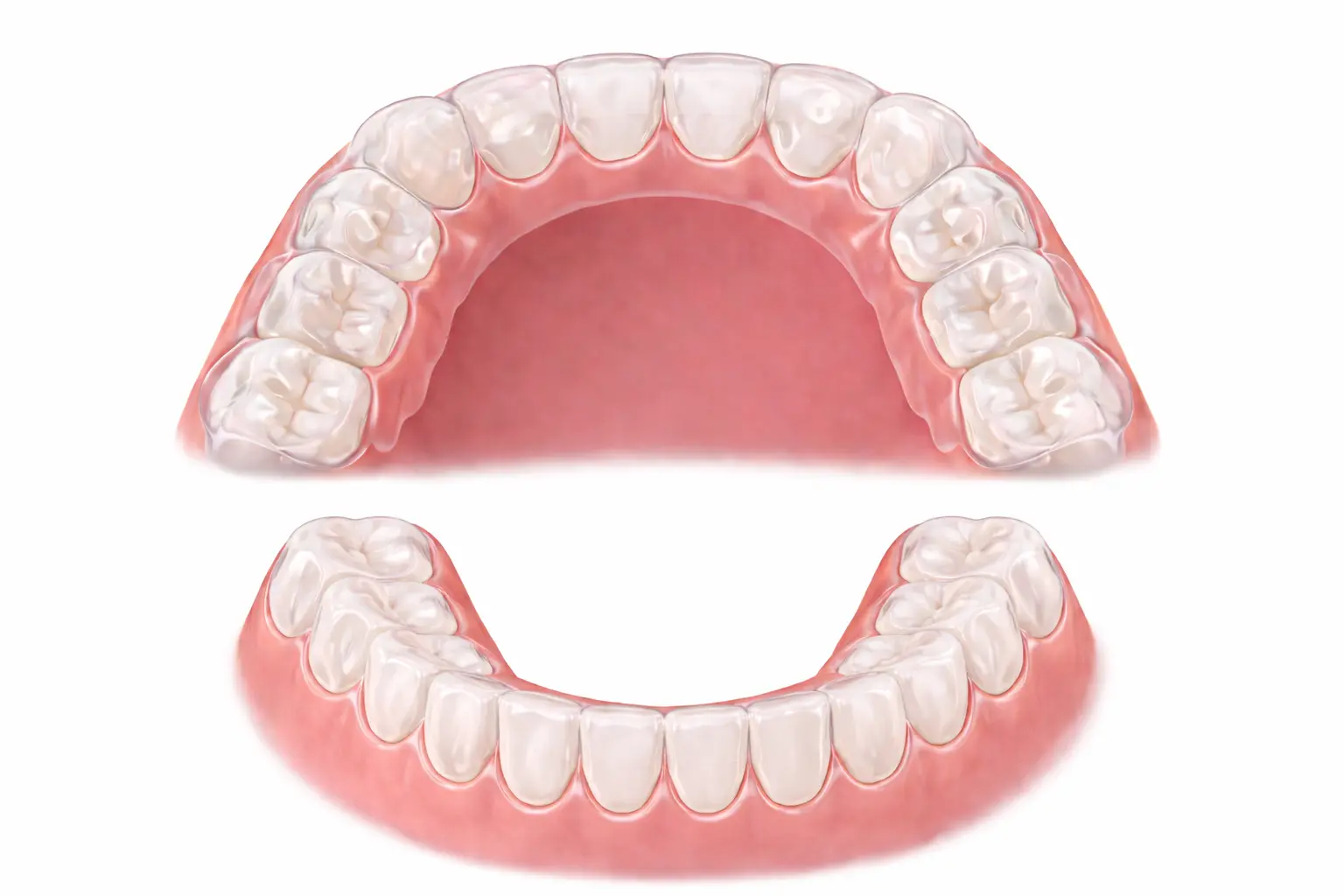
Clear retainers, often called Essix-style retainers, are removable transparent plastic appliances that fit closely over the teeth. They are commonly used after braces or clear aligner treatment to help maintain alignment and are a popular option when esthetics and easy daily wear are priorities.

Advantages

  • Nearly invisible appearance, making them esthetically discreet
  • Smooth, lightweight design that can improve comfort during daily wear
  • Easy removal for eating, brushing, and flossing
  • Effective for maintaining tooth alignment when worn consistently

Considerations

  • Can wear down, crack, or wrap over time
  • May warp if exposed to heat
    (hot water, dashboard, dishwasher)
  • Must be removed during meals and brushing
  • Need regular cleaning and periodic replacement
Hawley Retainers

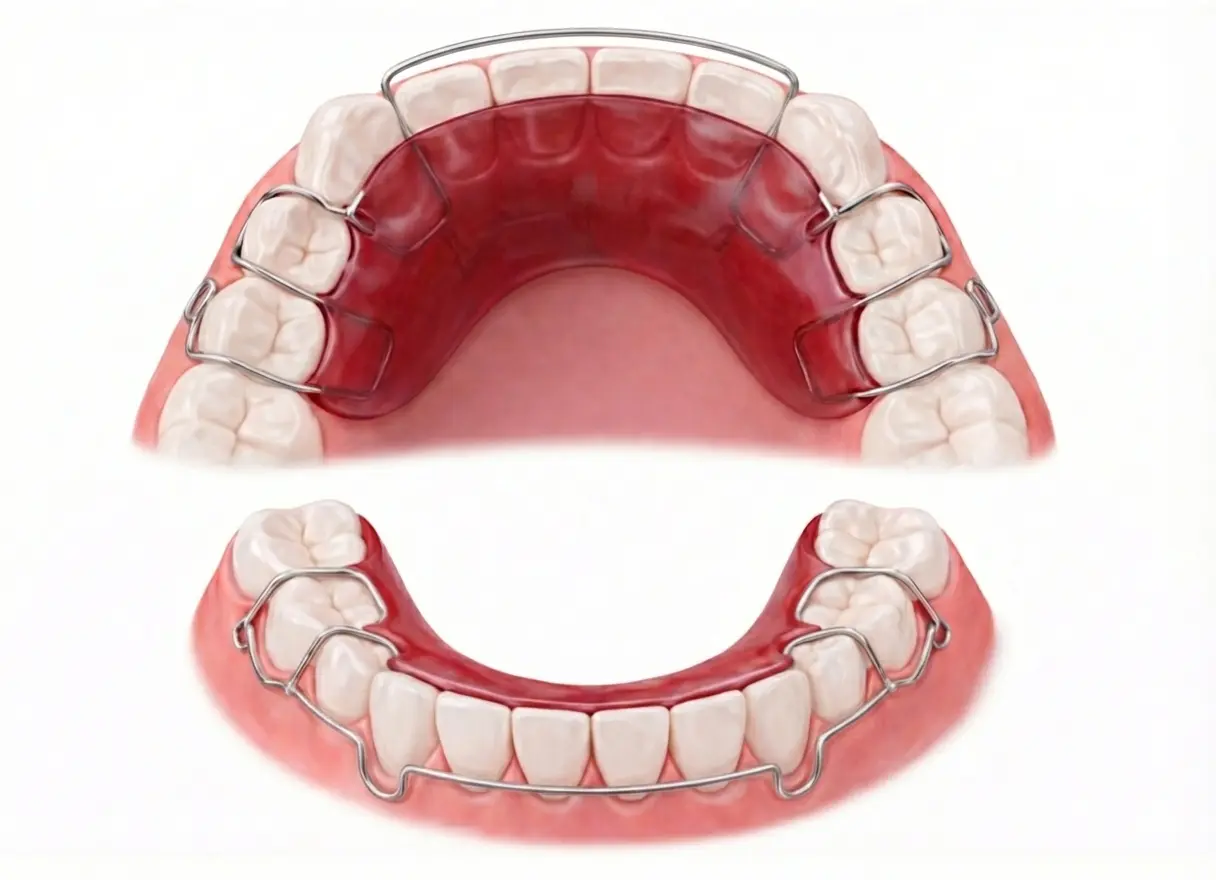
A traditional retainer design made with an acrylic base and a metal wire that sits across the front teeth. While more visible than clear retainers, Hawley retainers are durable, adjustable, and often chosen when long-term wear and fit refinement are important.

Benefits

  • Durable and long-lasting
  • Adjustable by your orthodontist when needed
  • Allows natural bite contact in many cases
  • Available in different acrylic colors to support patient preference

Considerations

  • More visible than clear retainers
  • Bulkier feel in the mouth
  • They may feel less comfortable at first
  • Acrylic portion requires consistent cleaning

Fixed Bonded Retainers

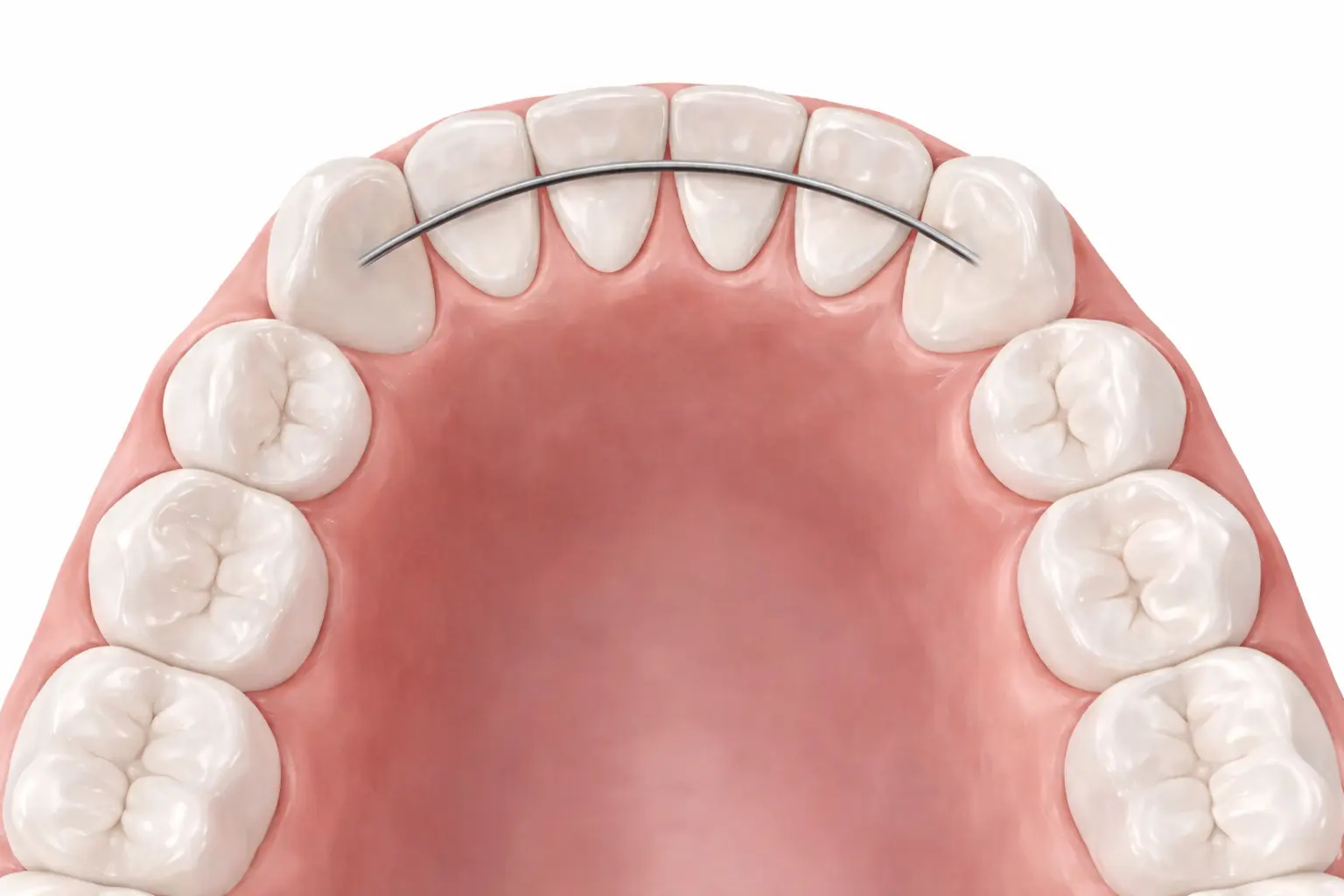
Fixed bonded retainers are thin wires permanently attached to the back of the teeth, usually on the lower front teeth and sometimes the upper front teeth. They work continuously to help prevent unwanted tooth movement without relying on patient compliance.

These retainers are particularly useful in areas prone to relapse. Even though they work full-time, they require excellent oral hygiene and regular dental checkups to ensure cleanliness and integrity over time. Fixed retainers do not replace the need for removable retainers and are often used together for comprehensive stability.

Benefits

  • Always working without relying on patient compliance
  • Excellent for preventing relapse in high-risk areas
  • Invisible from the front in most situations
  • Helpful for maintaining lower front tooth alignment

Considerations

  • More difficult to clean around the wire
  • Can loosen, bend, or break and may need repair
  • Some patients find them less comfortable initially
  • Regular checks matter because failures may go unnoticed
Quick Comparison

A side-by-side overview of the most common retainer types. Specific recommendations may vary depending on your bite, treatment history, and wear goals.

Clear Retainers Hawley Retainers Fixed Retainers
Aesthetics Nearly invisible when worn Visible metal wire and acrylic plate Hidden behind front teeth
Comfort Custom-molded to fit snugly; often less irritation overall May cause slight discomfort at first and can feel bulky initially No tray to insert or remove, but may feel rough at first initially
Speech Impact Minimal impact on speech for most patients Can affect speech briefly, especially at first Usually minimal
Maintenance Easy to clean; removable for brushing and flossing daily Requires more effort to clean wire and acrylic components thoroughly Requires careful flossing and cleaning around bonded wire daily
Replacement Frequency Typically replaced every 8 to 12 months depending on wear Often lasts longer with proper care Variable; may last years but may need repairs or rebonding
Material BPA-free plastic Metal wire and acrylic plate Bonded metal wire with dental adhesive
Retention Effectiveness Covers the full dental arch and is effective at holding teeth in place when worn as directed Effective and adjustable, but improper fit or inconsistent wear can reduce retention Very effective for holding bonded teeth, but does not usually replace a removable retainer for full-arch retention
Retainer Program

Prefer Essix Retainers After Treatment?

If clear Essix retainers are your preference after treatment, we can walk you through your options, explain how the program works, and help you plan for long-term retention and future replacement needs. Ask our team about our retainer program toward the end of your treatment.

Not a Face Focused Orthodontics patient? Contact our office to ask whether our retainer program may be a fit for you.