Space Deficiency
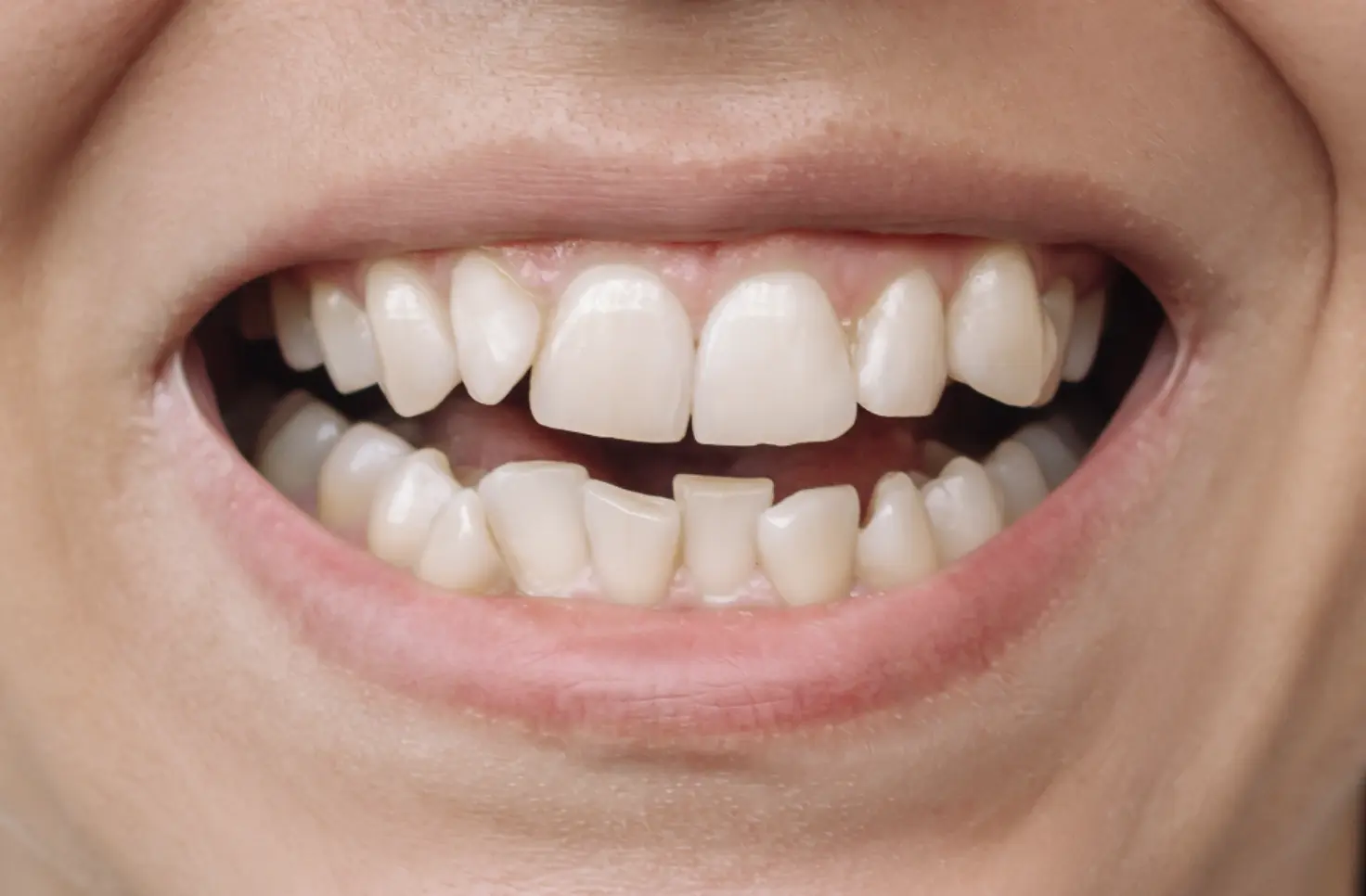
Many teens do not have enough transverse or arch-length space for erupted permanent teeth, creating rotation, overlap, and blocked eruption.


Teen expansion focuses on creating enough arch width for adult teeth, improving bite fit, and reducing crowding pressure while growth is still clinically useful.
Some teens also have breathing or posture-related concerns, but many simply do not have enough room for erupting permanent teeth. Expansion helps us build space before deciding on alignment mechanics.
Compared with younger patients, teens may have less skeletal flexibility, so appliance selection and sequencing become more important. Dr. Yu evaluates crowding pattern, eruption stage, and skeletal response potential before deciding protocol.
Many teens do not have enough transverse or arch-length space for erupted permanent teeth, creating rotation, overlap, and blocked eruption.
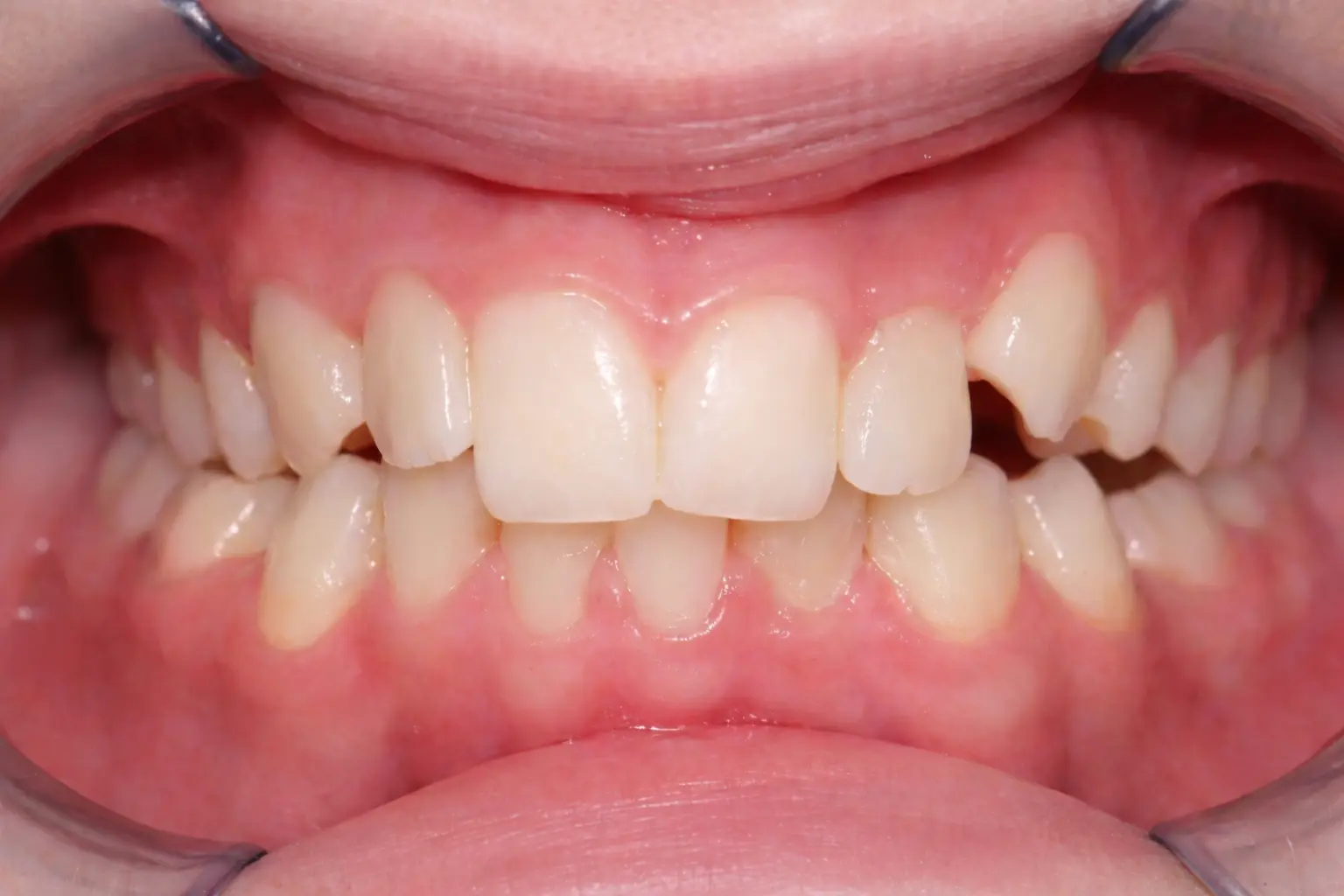
Expansion can help correct crossbite tendencies and improve upper-lower arch coordination before alignment mechanics begin.
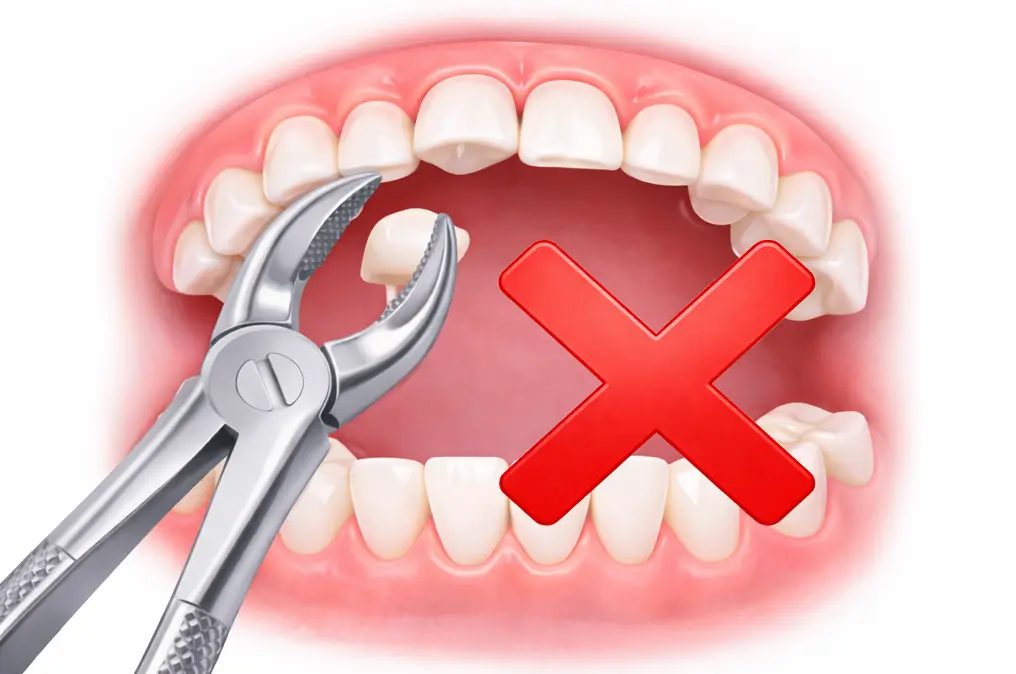
In selected cases, expansion-first sequencing can reduce pressure toward extraction planning by creating usable space earlier.
Even when crowding is the main reason families seek treatment, airway-related patterns may still affect sleep quality, comfort, focus, and daily performance; the common signs we screen for are listed below.
Teens are more skeletally mature than younger children, but many still respond well to expansion when treatment is carefully staged. This helps us select the right appliance and activation protocol based on maturity, eruption timing, and bite pattern while coordinating stabilization and alignment sequencing for more predictable long-term results.
Even after early facial growth has slowed, adolescents can still benefit from orthodontic treatment, myofunctional therapy, multidisciplinary support, and targeted lifestyle changes, especially healthier breathing habits, to improve airway function and overall treatment outcomes.

We customize appliance selection based on skeletal maturity, dentition eruption, and correction goals. These are the primary appliance pathways used for teen expansion planning.
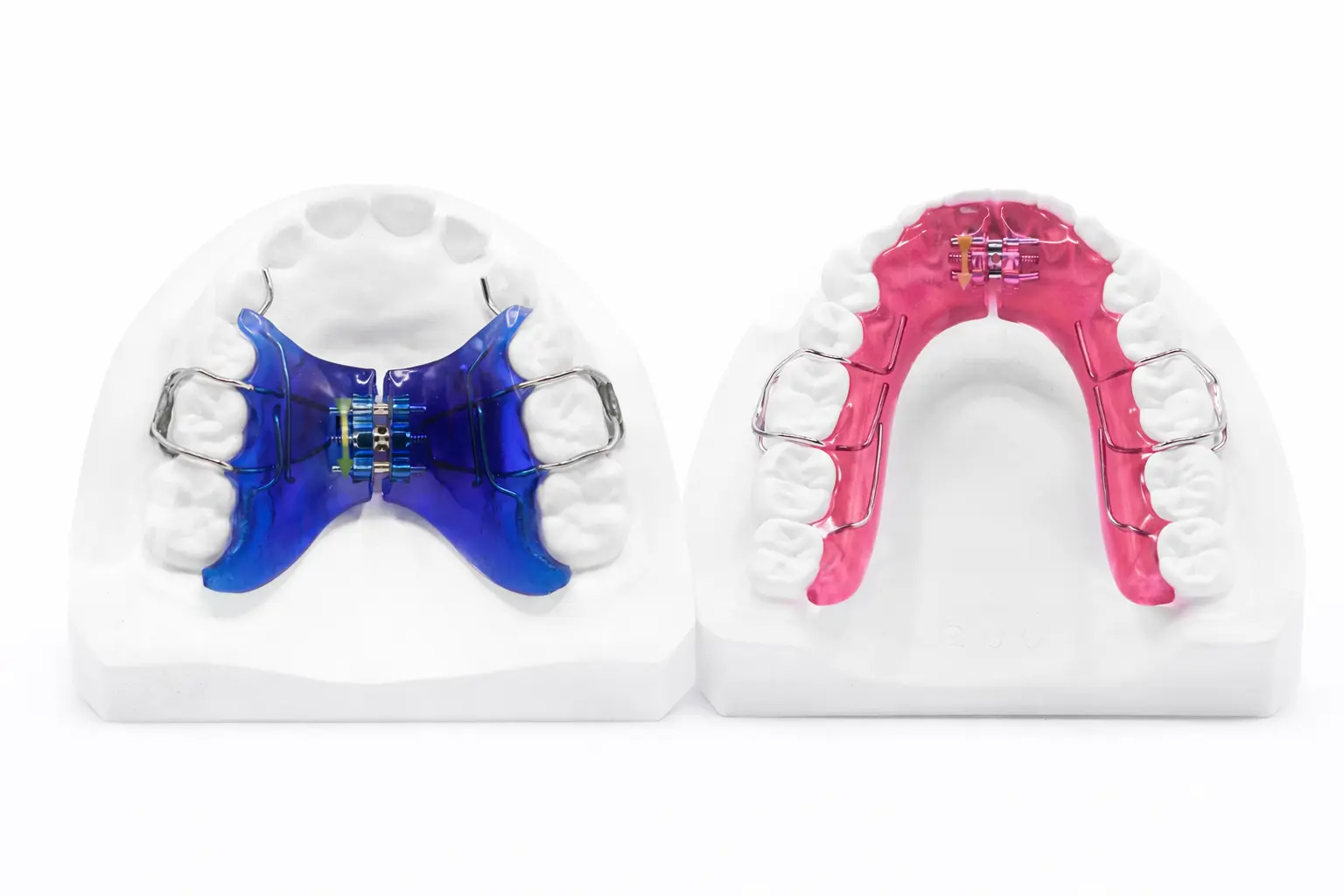
Used in selected mild to moderate teen cases when controlled space gain is needed and wear compliance is dependable.
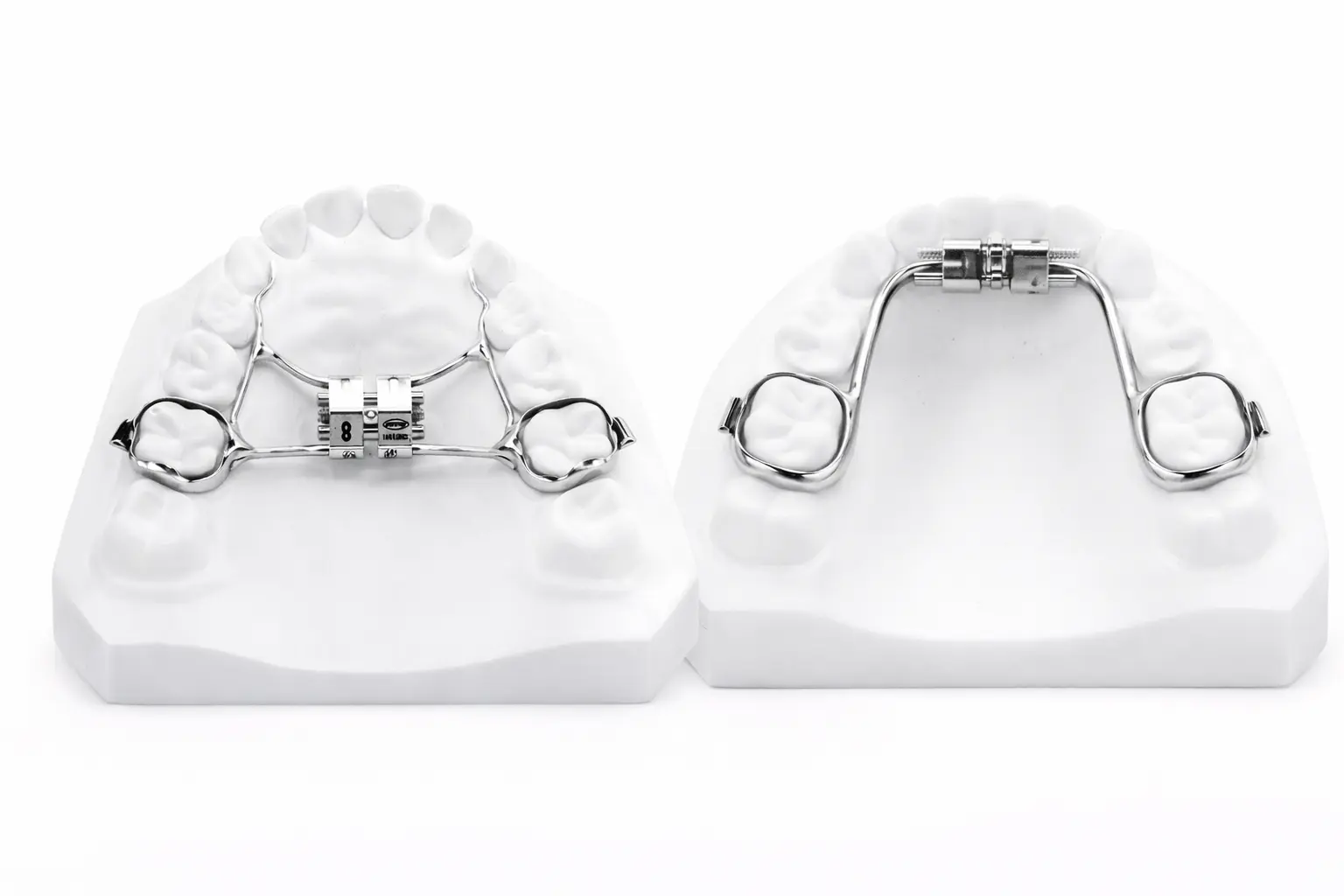
Used when stronger, more consistent force delivery is needed for transverse correction, crossbite improvement, or larger space requirements.
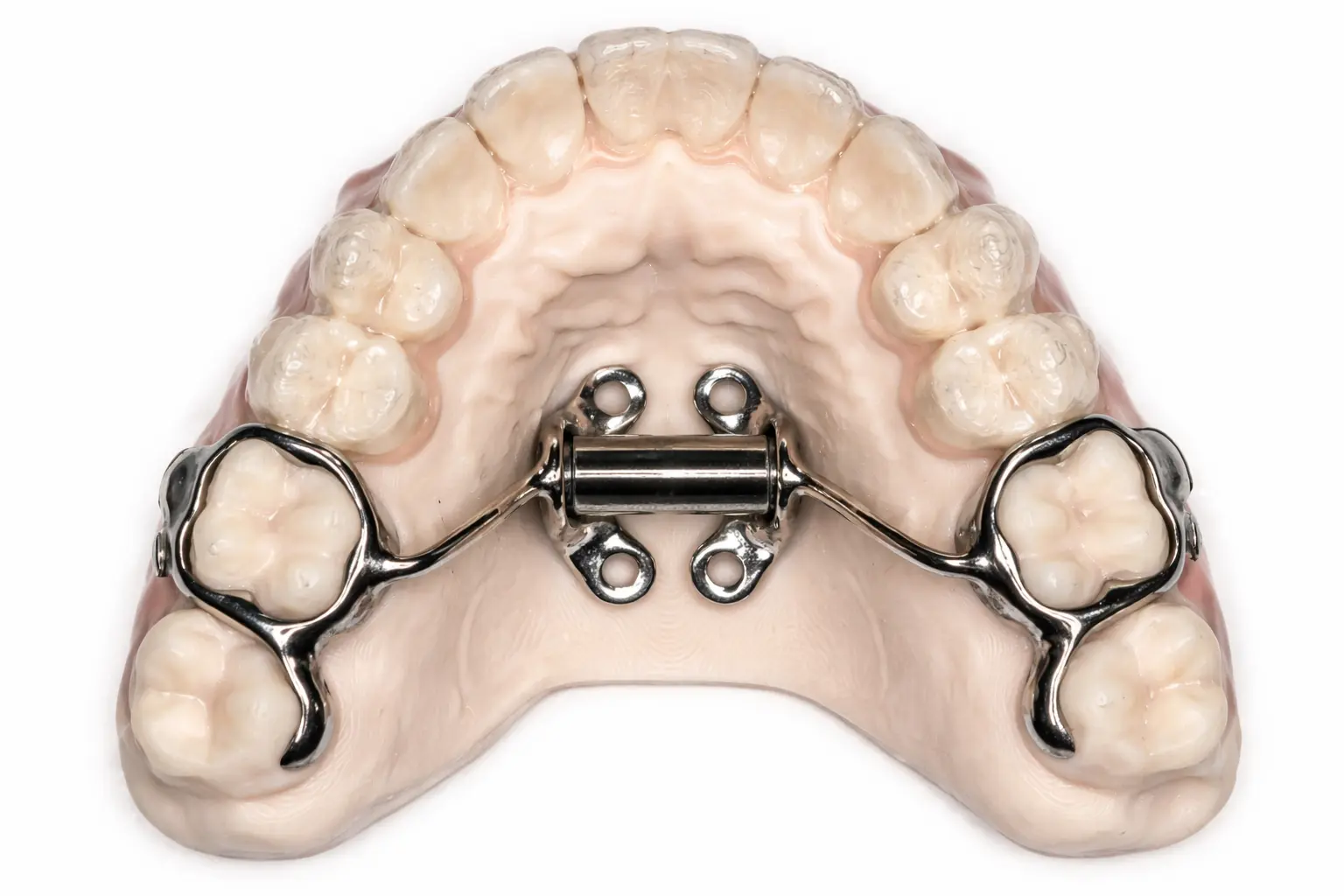
Bone Supported Expander is a miniscrew-assisted expansion method that delivers force closer to the skeletal foundation of the palate, not just through the teeth. In selected teen cases, this gives a more controlled way to develop upper-jaw width before detailed alignment.
The midpalatal suture is the seam between the right and left sides of the upper jaw. In younger children it is more flexible, but in teens it becomes progressively more interlocked. That is why selected teen cases may need bone-supported expansion to direct force to the suture more predictably.
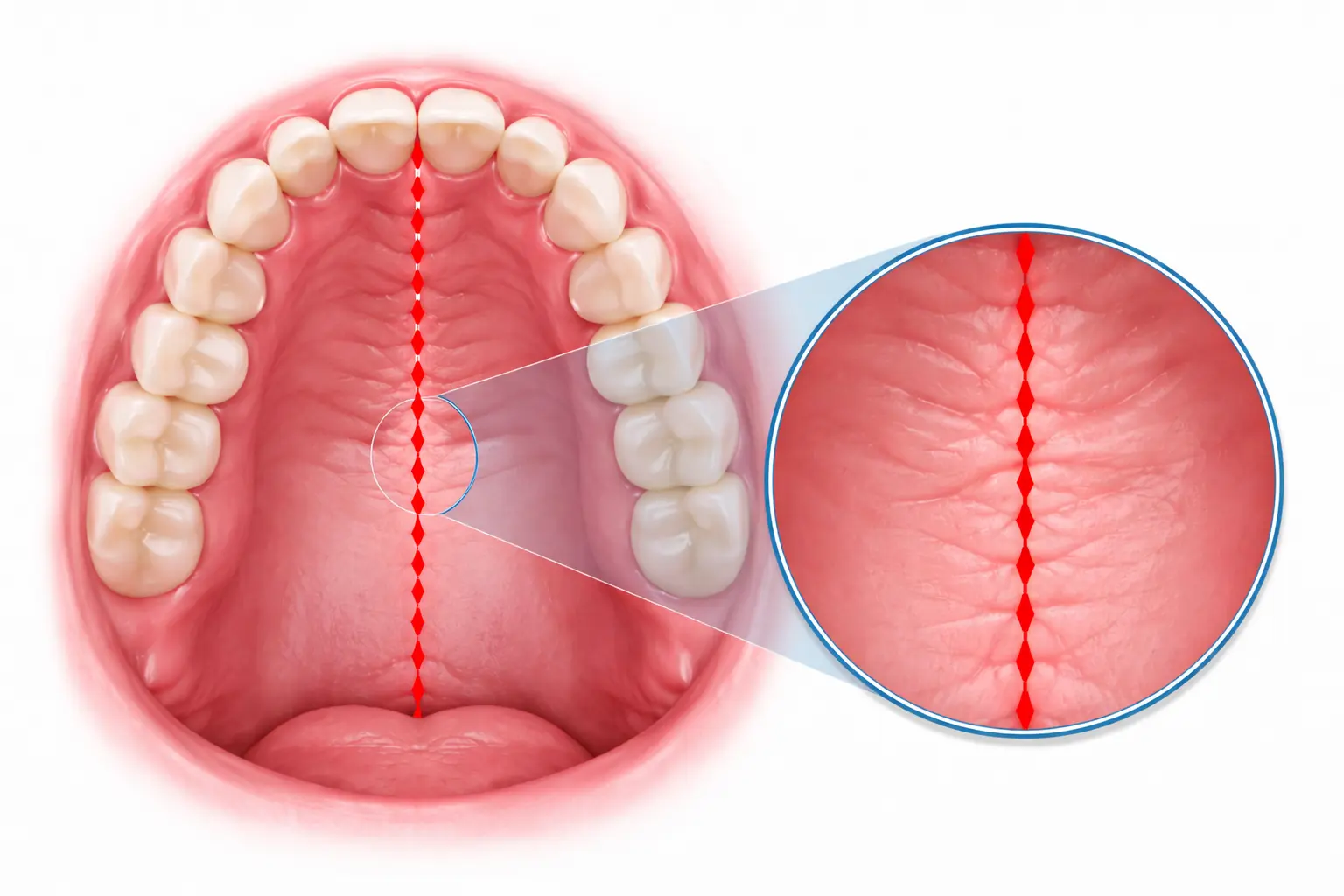
As teens become more skeletally mature, the midpalatal suture becomes less flexible and may not respond predictably to tooth-borne force alone. Bone-supported anchorage helps direct expansion force toward the suture and supporting bone where we want orthopedic change.
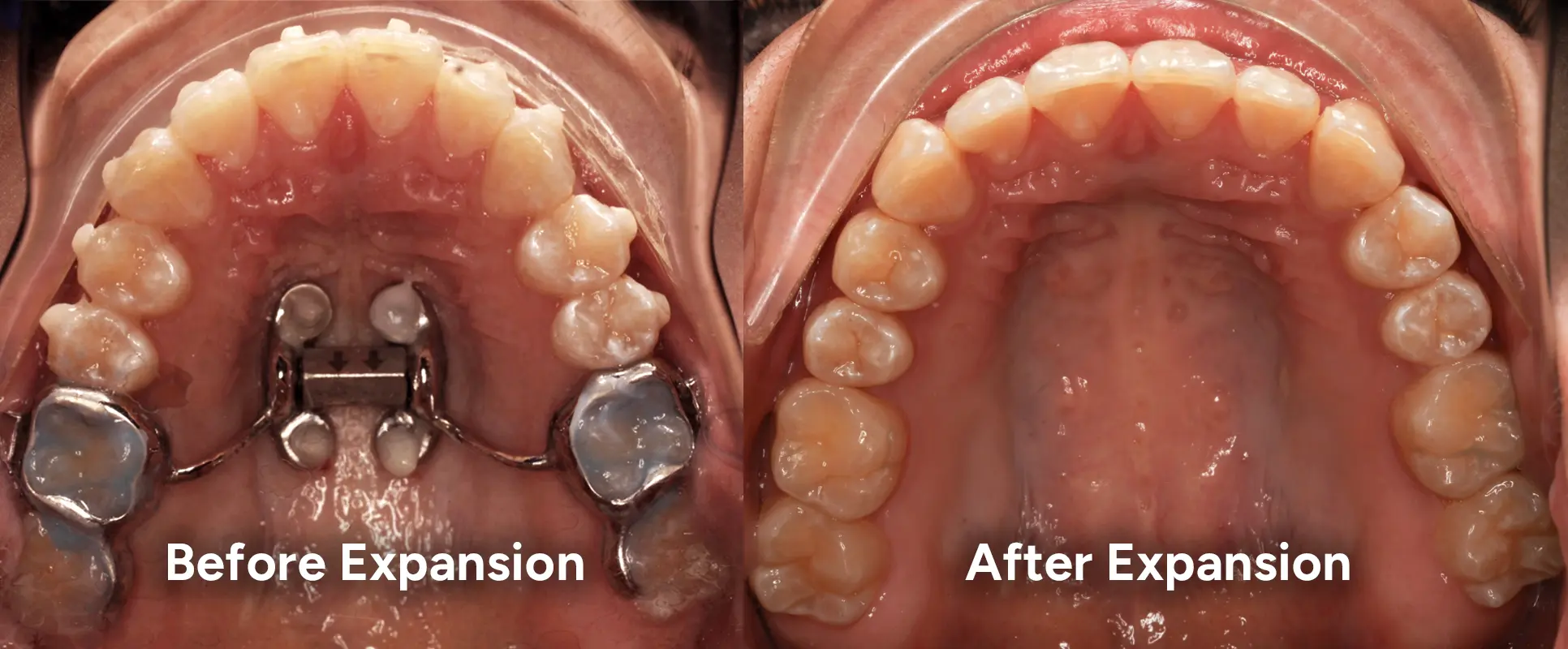
In most teen cases, Dr. Yu uses one of these sequencing pathways based on skeletal maturity, eruption timing, and bite goals:
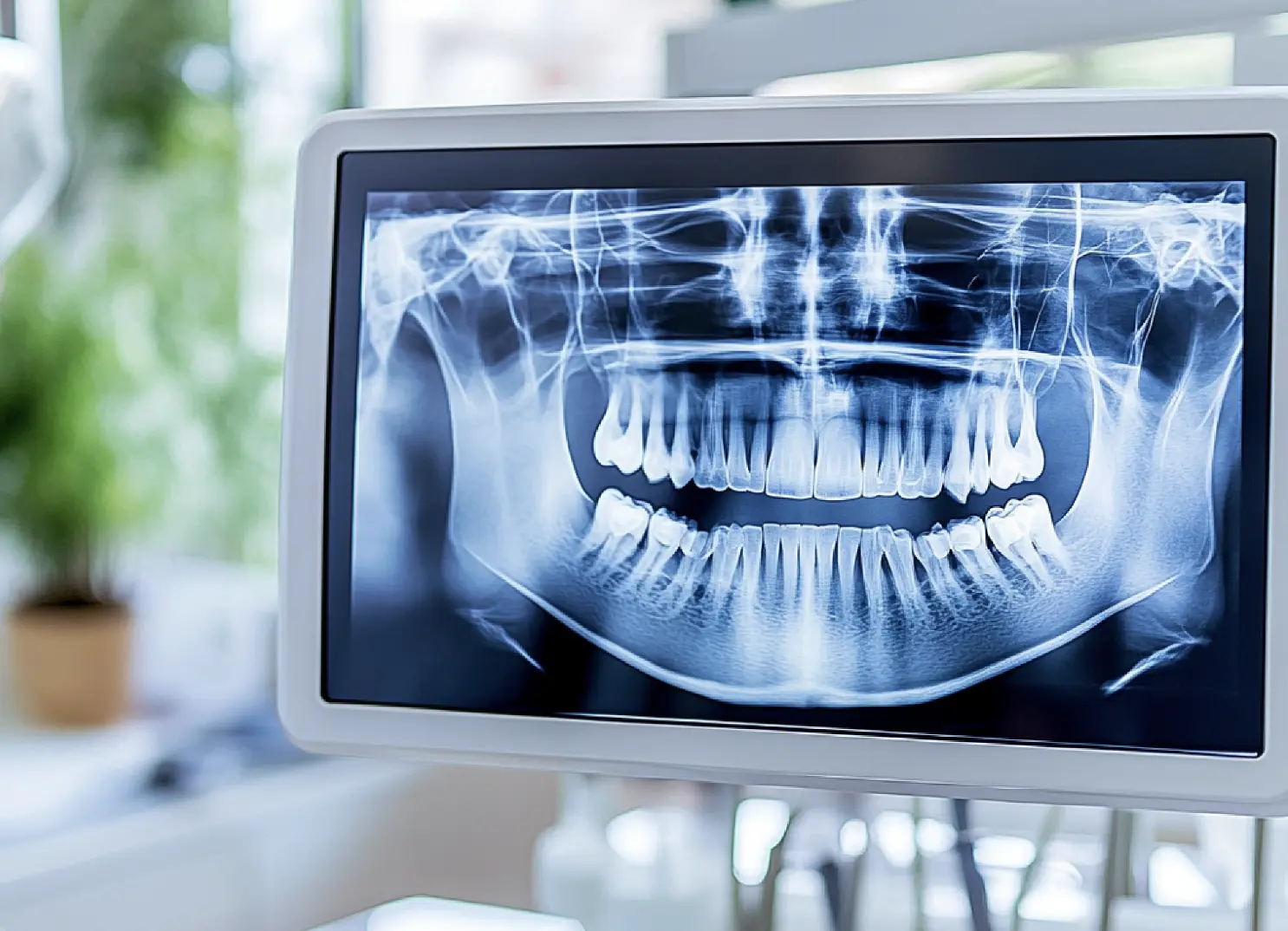
Final treatment direction is determined during consultation after complete clinical exam and imaging review.
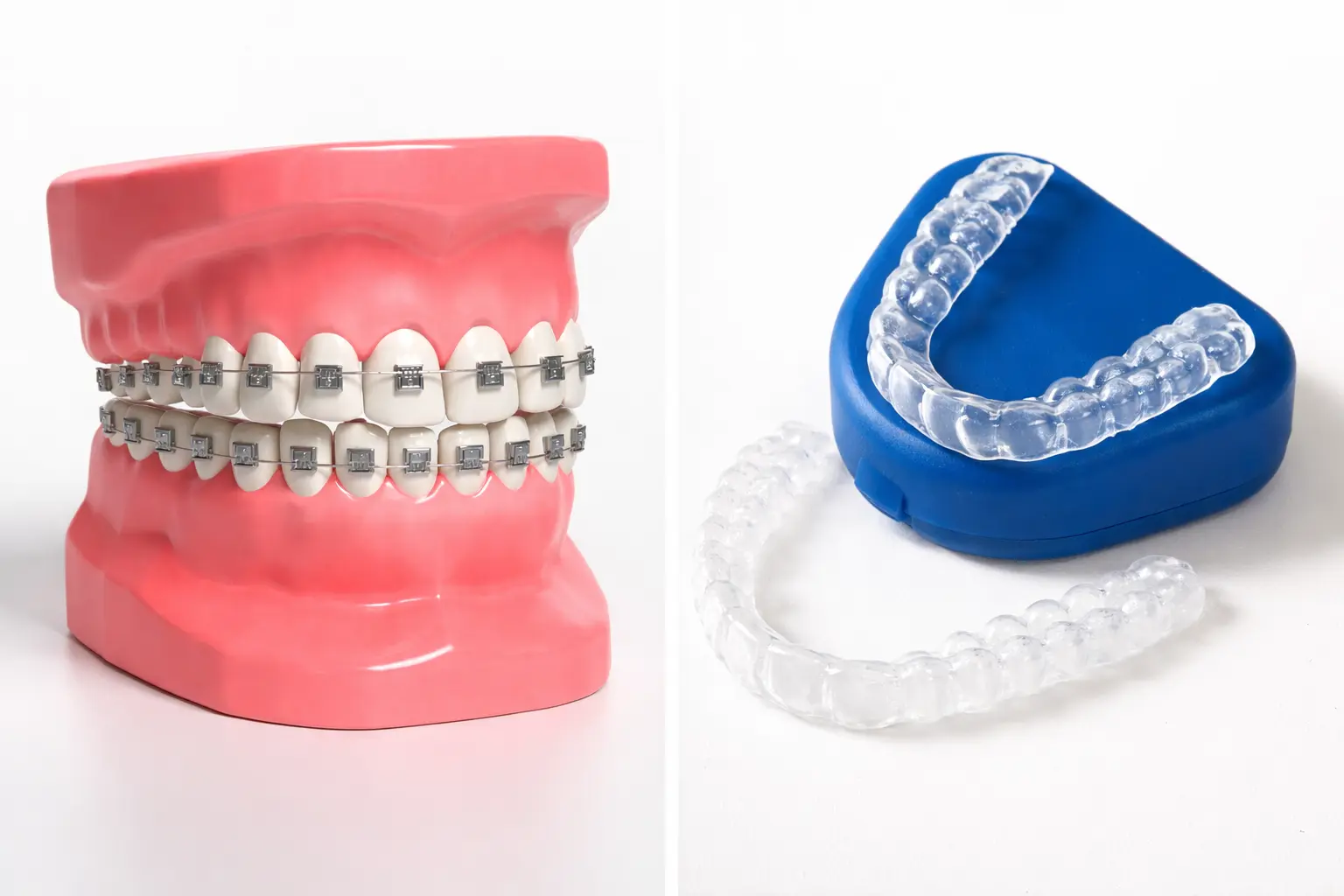
After expansion goals are reached, most teens transition into alignment with either braces or aligners. Dr. Yu determines the timing based on eruption completion, bite response to expansion, and the level of control needed to finish tooth position and bite fit efficiently.
See our Aligners page and Braces page for more detail.
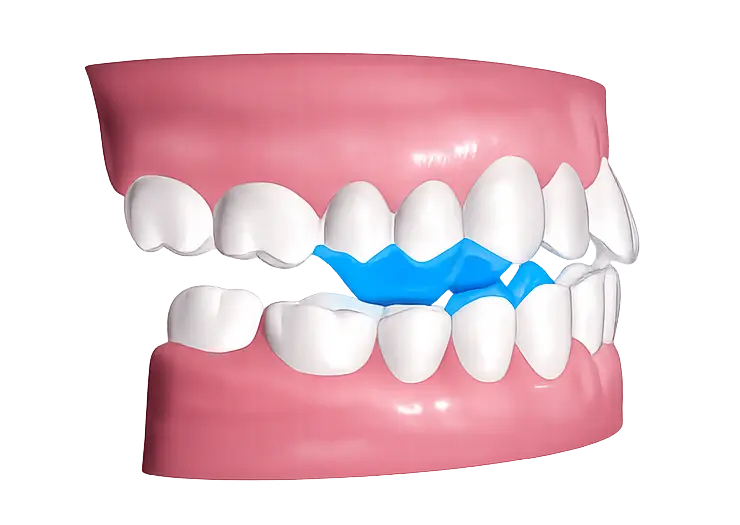
When the lower jaw (mandible) is positioned posteriorly relative to the upper jaw, selected teens may benefit from growth-guidance mechanics while meaningful growth potential remains. This relationship can influence overjet, facial profile balance, bite function, and long-term stability, so lower-jaw position is evaluated alongside eruption stage and growth timing before a treatment protocol is selected.

Consultation is where Dr. Yu determines the best pathway for your teen, including whether removable, fixed, or Bone Supported expansion is most appropriate and whether sequencing should pair with lower expansion or aligner staging.
You will leave with a clear roadmap that outlines appliance choice, activation pacing, progress checkpoints, and timing for transition into full alignment.
Call or text: 805-374-9377