





Early Expansion

Arch Development in Growing Children
Phase I Orthodontics

Early expansion, also called arch development, is the process of gently widening the upper or lower jaw in growing children to create healthy space for the tongue, teeth, and airway.

These are often not just “crooked teeth” concerns. In many children, they reflect underlying growth pattern, breathing, and functional development issues that benefit from earlier evaluation.

Comprehensive Evaluation

At Face Focused Orthodontics, we take a comprehensive approach to arch development. We evaluate more than tooth position so treatment planning supports the child’s overall growth pattern and function.

Growth and Functional Patterns

Group of smiling children

Arch development decisions are guided by how the jaws are growing, how the child is breathing, and how the tongue functions at rest and during swallowing, not just by visible crowding, so treatment planning can better support long-term function and facial development.

  • Skeletal growth patterns
  • Airway development
  • Breathing habits
  • Tongue posture

Facial and Dental Coordination

Child smiling for facial and dental coordination section

We also evaluate how the teeth and arches fit within the face so expansion supports balanced development, functional bite coordination, and stable alignment over time.

In many cases, this helps us determine whether growth guidance, expansion, or a staged approach is the best way to support long-term improvement.

  • Facial balance
  • Dental alignment
  • Crossbite relationship
  • Available space for erupting teeth
Why Timing Matters

What Is Possible Depends on Growth Stage

Children are still growing, the sutures of the upper jaw are more flexible, and bone is more adaptable. This makes orthopedic change more predictable and often less invasive when addressed at the right developmental stage.

Timing matters because early expansion can support healthy growth direction while reducing the need for more complex correction later.

Growth and dentition age stages from early childhood through post-adolescence

In many children, the best time to come in for an evaluation is while they are still in early mixed dentition (often around ages 6 to 9), or sooner if parents notice crossbite, mouth breathing, or crowding concerns so growth can be guided at the most responsive stage.

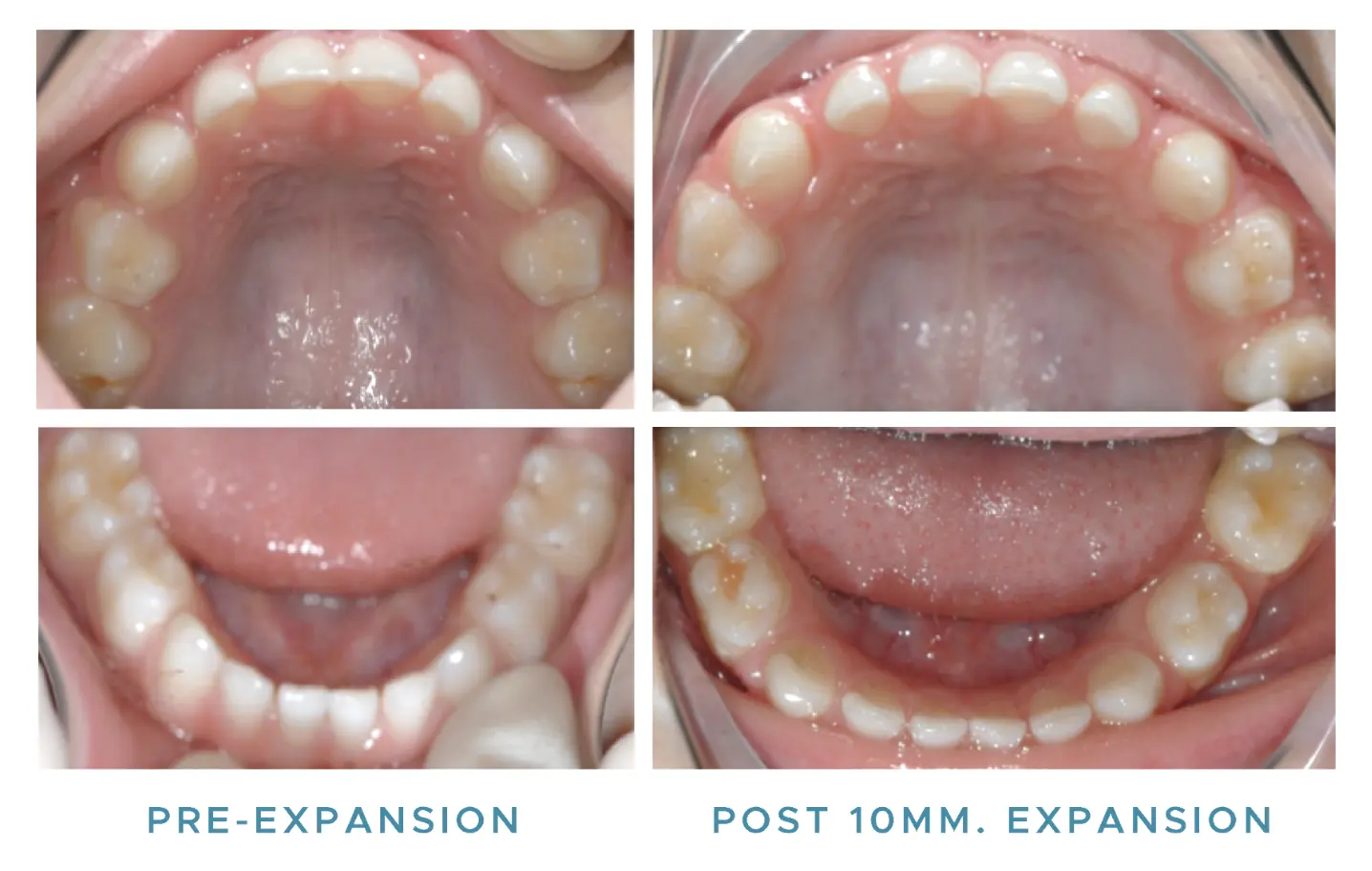
Pre-expansion and post 10 millimeter expansion clinical photos of upper and lower arches

When Done at the Right Time, Expansion May Help

  • Create room for permanent teeth
  • Reduce the likelihood of extractions later
  • Improve crossbites
  • Support nasal breathing
  • Encourage proper tongue posture
  • Promote balanced facial development
  • Improve arch coordination as the bite develops
  • Create a more stable foundation for future alignment
  • Support better eruption guidance as permanent teeth come in
Breathing and Oral Habits

Function Can Affect Growth

Many children with constricted arches also show functional patterns that affect growth over time, including mouth breathing, low tongue posture, and persistent oral habits. These patterns can influence how the arches develop and how the face grows.

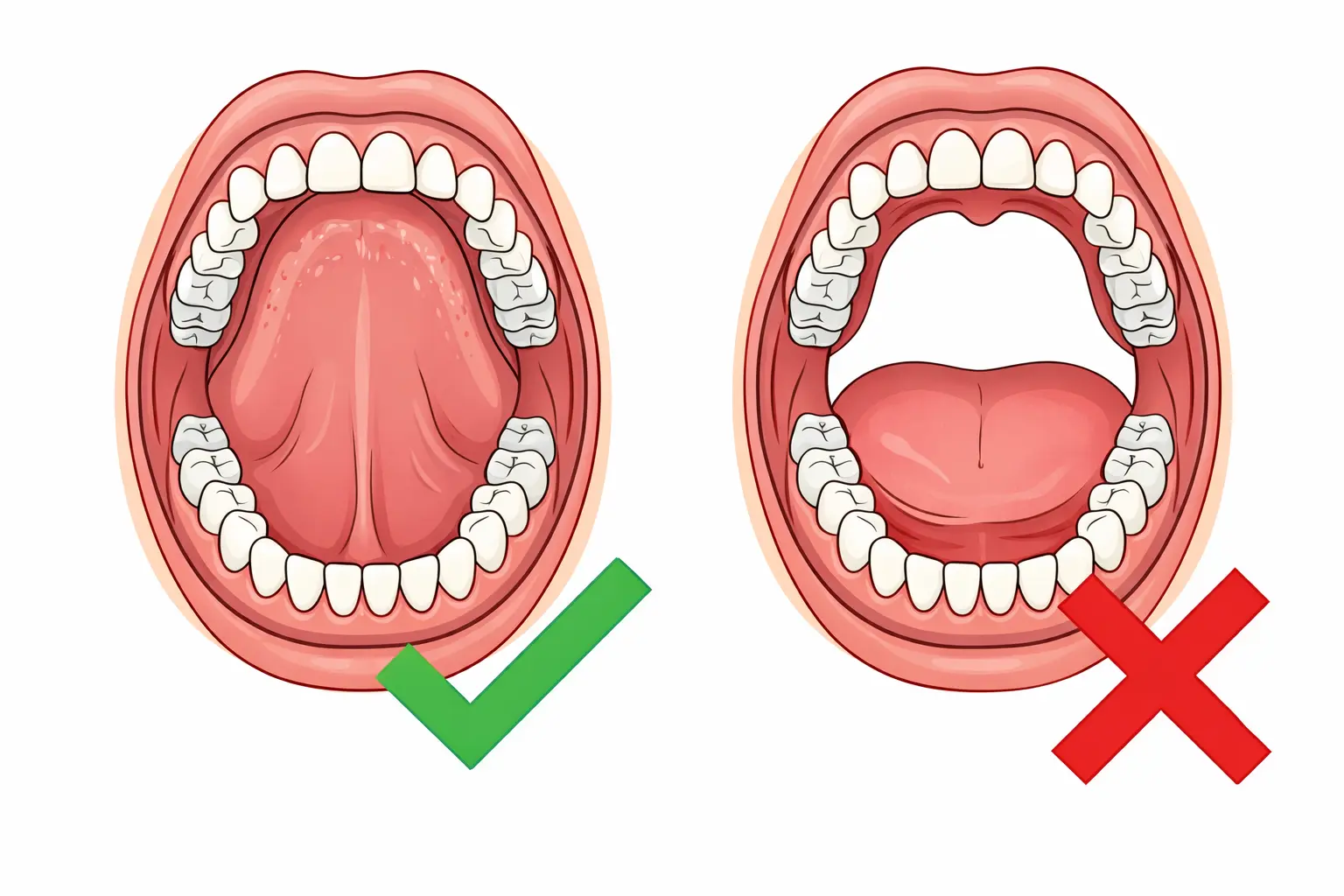
Illustration comparing optimal tongue posture and low tongue posture
Low tongue posture can reduce natural support for upper arch development
Young child thumb sucking
Thumb sucking, prolonged pacifier use, and tongue thrust can contribute to narrowing or bite imbalance
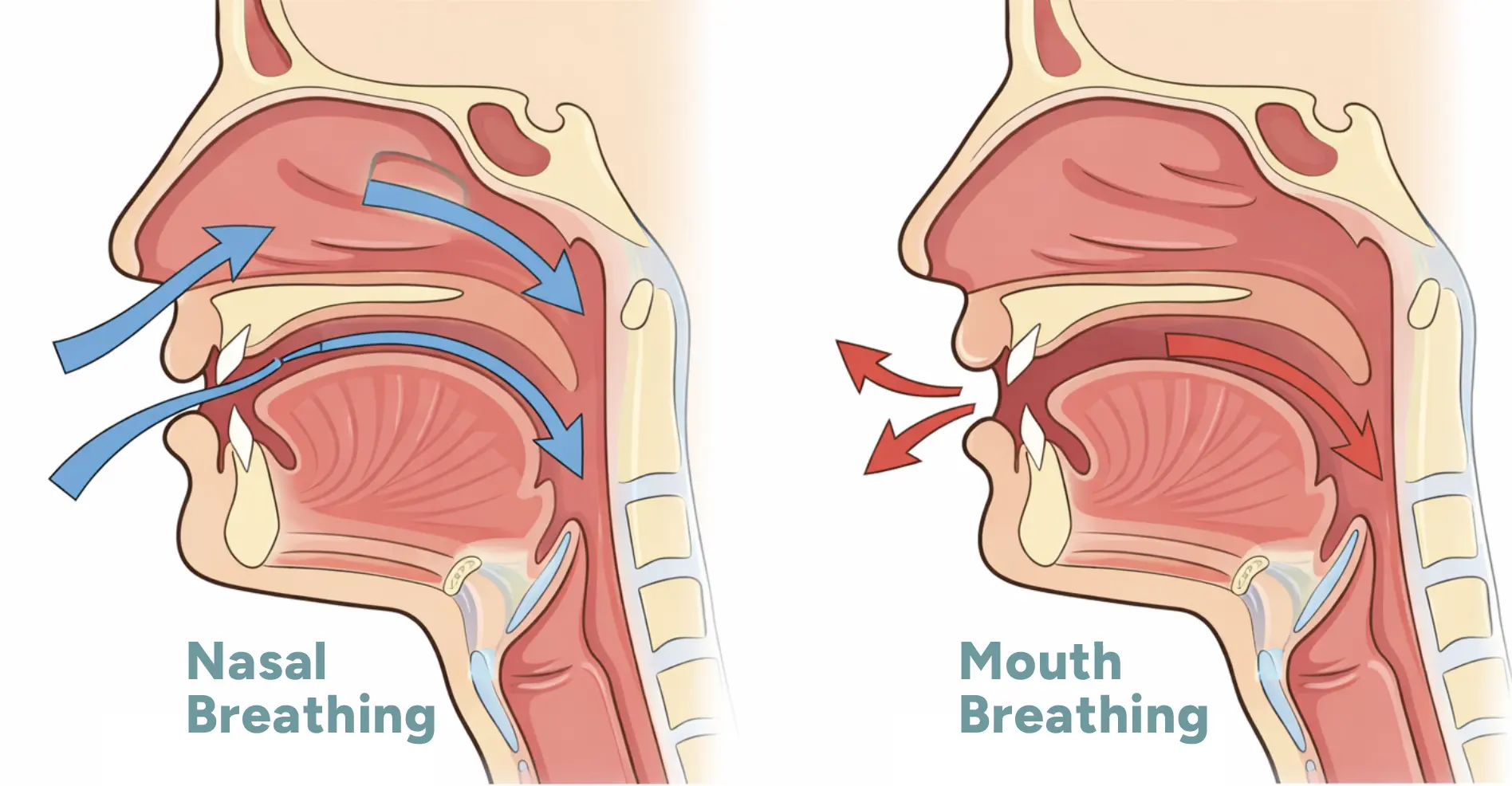
Illustration comparing nasal breathing and mouth breathing
Mouth breathing may be associated with altered oral posture and facial growth direction over time
Child receiving oral assessment or myofunctional support guidance
Habit correction and myofunctional support may be part of the overall treatment plan in some cases

When oral posture is not ideal over time, some children may also show airway-related symptoms that can affect sleep quality and day-to-day comfort.

Enlarged tonsils or adenoids
Snoring during sleep
Chronic nasal congestion
Habitual mouth breathing
Restless sleep or frequent waking
Dry mouth on waking
Morning bad breath
Dark circles under the eyes
Speech clarity concerns
How We Do Early Expansion

Customized Expansion

We customize expansion based on age, growth stage, and anatomy. The goal is to use the most appropriate approach for the type and severity of constriction while supporting comfort, hygiene, and stable progress.

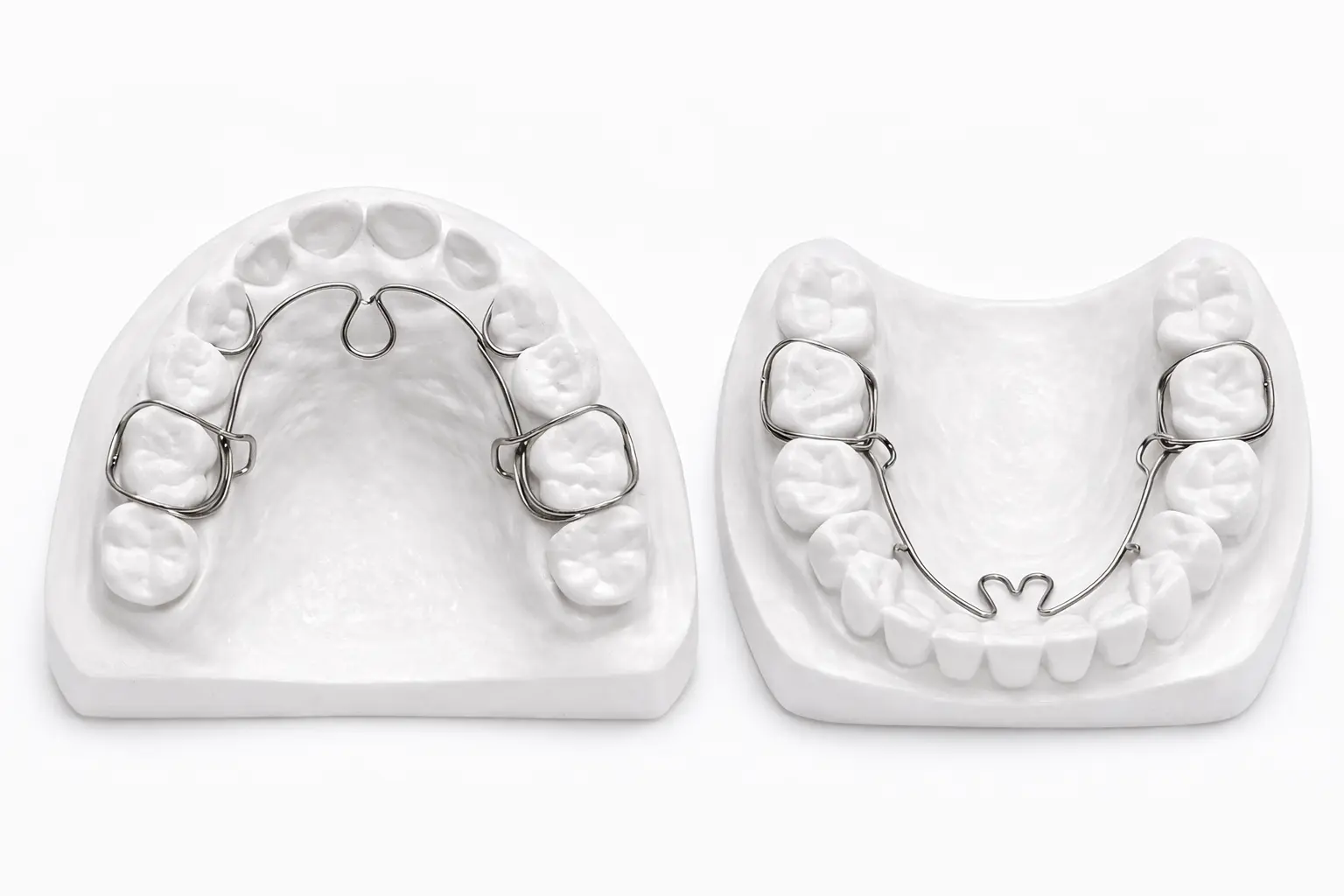
Removable Expanders (Upper / Lower)
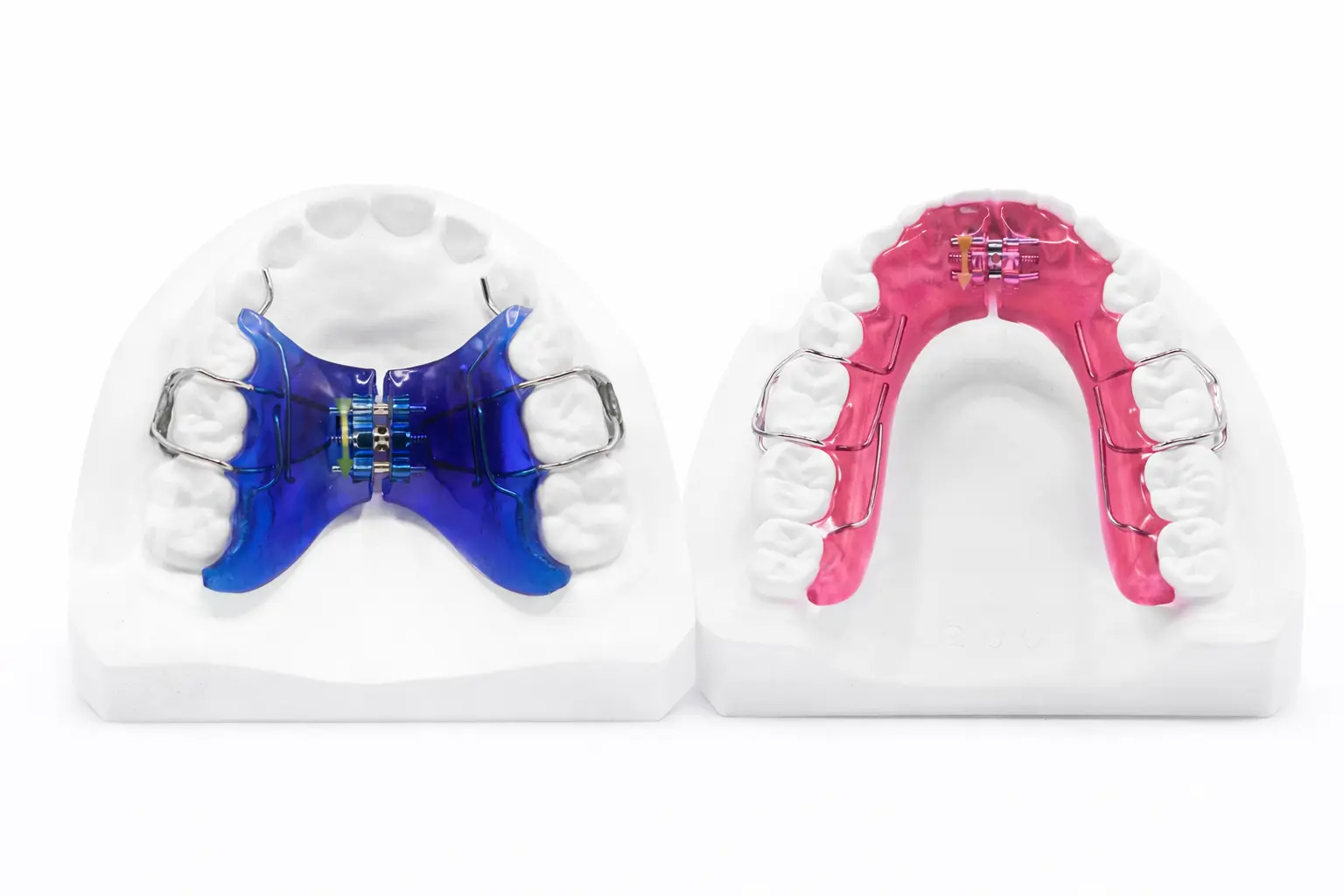
Upper and lower removable expander appliance photos

Used in selected mild to moderate cases, removable expanders can be designed for the upper or lower arch and adjusted gradually while allowing easier hygiene access.

  • Often appropriate in younger children with early constriction patterns
  • Can support brushing access and routine appliance cleaning
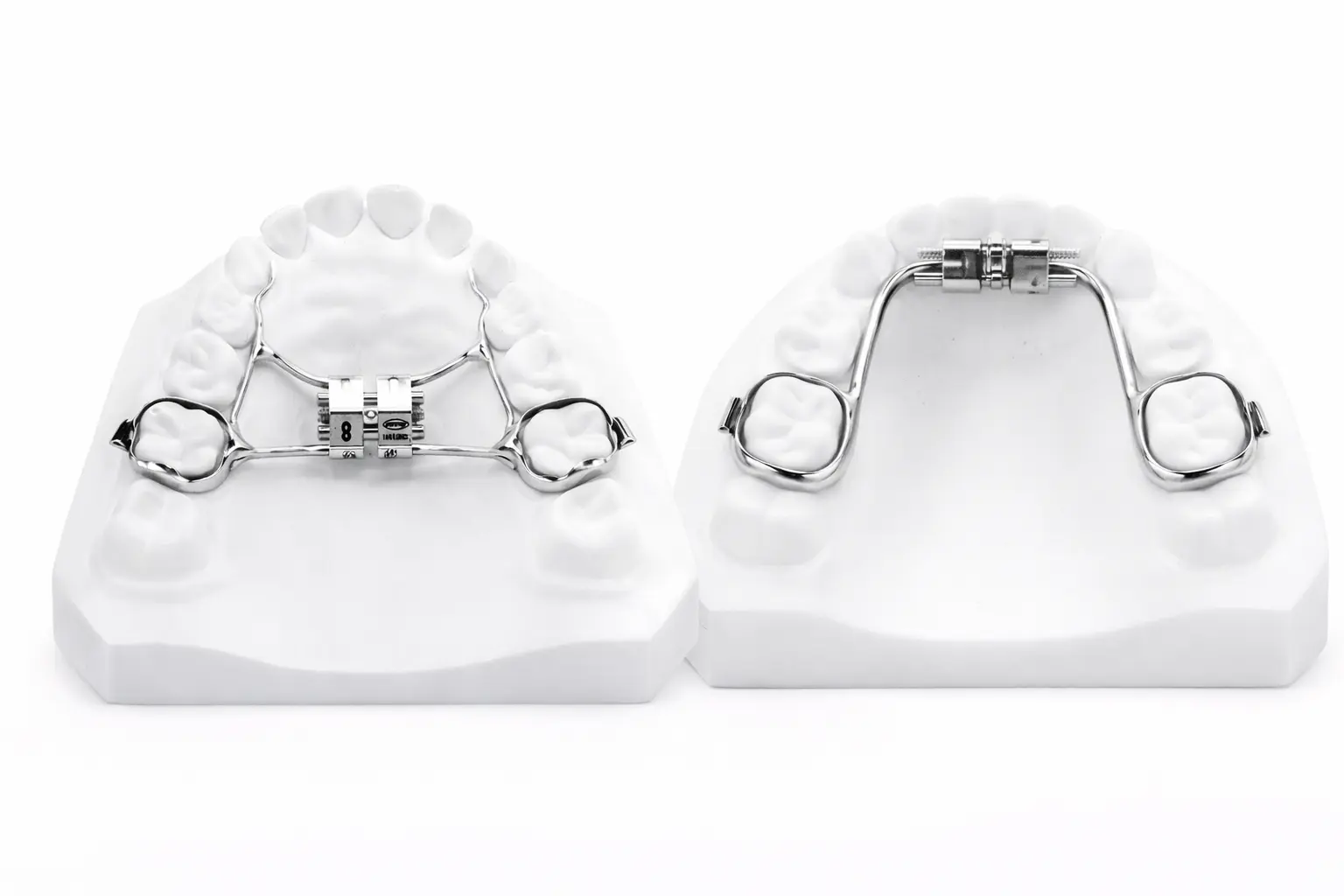
Fixed Expanders (Upper / Lower)

Upper and lower fixed expander appliance photos

Bonded to molars and activated gradually, fixed expanders provide more controlled orthopedic expansion and are commonly used for crossbites or more significant narrowing.

  • Provides consistent activation with controlled expansion mechanics
  • Often selected when greater correction or crossbite control is needed

ALF (Advanced Lightwire Functional)

ALF (Advanced Lightwire Functional) appliance example

ALF (Advanced Lightwire Functional) appliances can be used in selected cases to guide gentle arch development while supporting function-focused growth and adaptation.

  • Applies light, continuous forces for gradual orthopedic and dental guidance
  • Can be integrated with a broader growth and functional treatment plan

Invisalign Palatal Expander (Metal-Free)

Child holding Invisalign Palatal Expander appliance

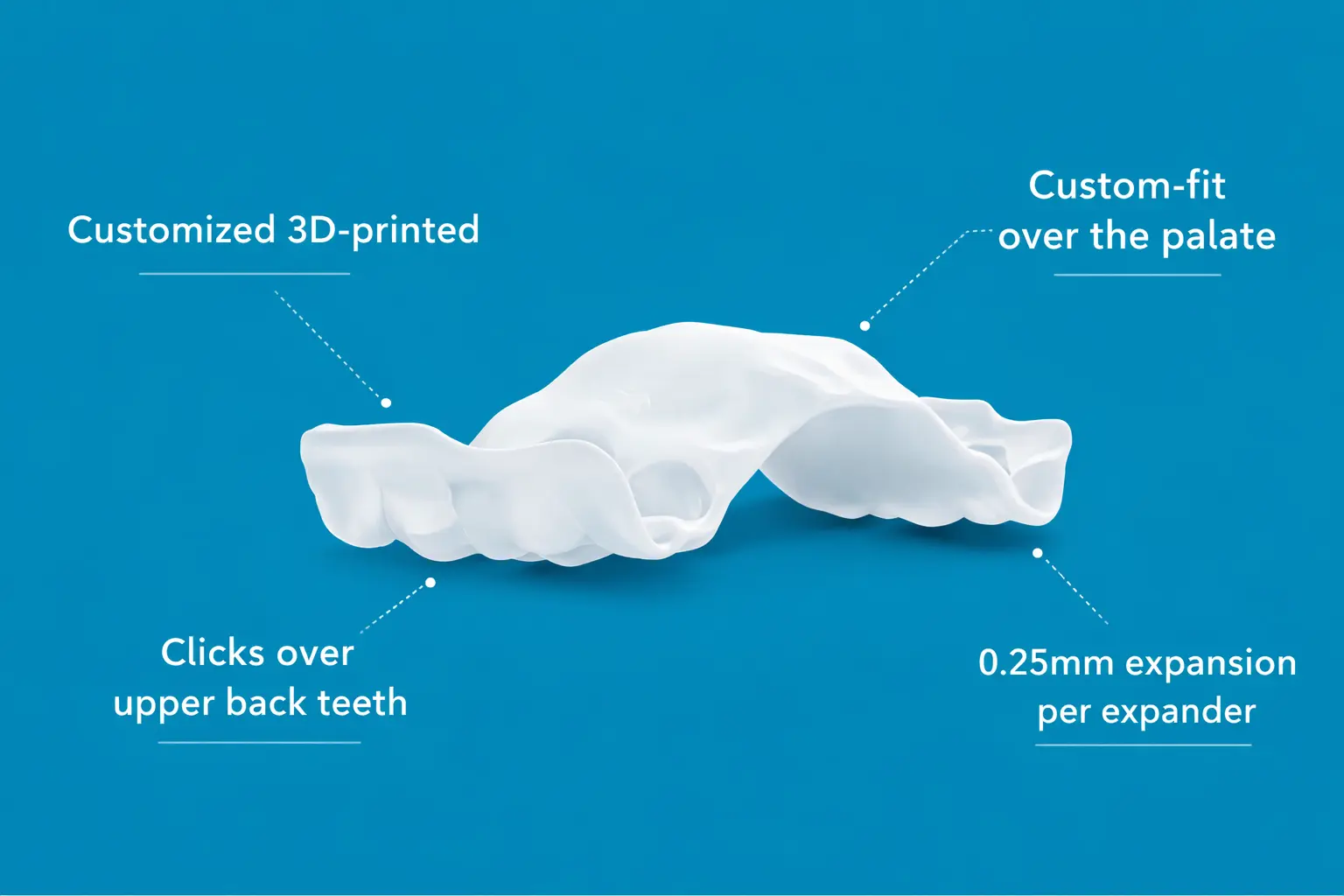
The Invisalign Palatal Expander System uses a series of removable, 3D-printed expanders that gradually widen the upper arch to create room for adult teeth in selected growing patients.

  • Designed for growing kids (often ages 6-11) with a custom-fit, metal-free appliance approach
  • Removable design can support easier brushing and flossing compared with traditional fixed metal expanders
Adjunctive Orthopedic Option

Facemask Therapy

Facemask therapy is not for every child. In specific growth patterns, it may be recommended to support forward maxillary development and improve skeletal bite relationship when timing and anatomy indicate it can be beneficial.

Child wearing orthodontic facemask appliance

When We May Discuss It

Most often in children with developing Class III patterns, underbite tendencies, or maxillary deficiency where early orthopedic guidance may reduce the need for more complex correction later.

How We Integrate It

Facemask use is typically paired with an upper expansion approach and a structured wear plan. We monitor progress closely and adjust the protocol based on growth response and comfort.

What Families Should Expect

We review wear expectations, comfort tips, and follow-up timing in detail so families know how to support progress at home and when to contact us with questions.

Follow-Up and Progress Checks

Regular follow-up visits help us confirm fit, track skeletal response, and adjust the treatment plan so progress stays on course throughout growth.

What to Expect

At
Face
Focused

1

Evaluation

During your consultation, Dr. Yu evaluates facial growth, bite relationship, arch form, breathing habits, and timing.

2

Custom Plan

We review whether any treatment is recommended and outline the timing and treatment approach that best fits your child’s needs.

3

Start Expansion

All appliances are custom-fitted. We often introduce them in a way that helps patients get used to them, and we provide detailed instructions on how the appliance works and what to expect.

4

Check Up

During the expansion phase, we schedule periodic checkups and continue adjusting the turning schedule when needed based on progress and response.

5

Alignment

Often, after expansion, we will do alignment to help ensure the teeth and dentition are in the right position.

6

Monitor

After alignment is complete, we continue to monitor growth as the teeth develop as part of the overall treatment plan.

After Expansion

Once the desired width is achieved, the next phase depends on the child’s age, eruption pattern, and treatment goals. Expansion is often one part of a broader growth-guidance plan.

After expansion, we may use a stabilization period and then transition into the next appropriate phase to protect progress, support continued development, and coordinate future alignment needs as permanent teeth erupt.

  • Hold the expansion for stabilization
  • Begin limited alignment when appropriate
  • Transition into a growth guidance phase
Early Orthodontic Evaluation

Schedule a Consultation
to Learn if Early Expansion Is the Right Next Step

If you are noticing crowding, crossbite, mouth breathing, or oral habit concerns, schedule a consultation with Dr. Yu to learn more. We can evaluate growth patterns, discuss timing, and review whether arch development may help support healthier long-term function and facial development.

Call or text our office: 805-374-9377 Schedule a Consultation

Dr. Yu portrait